
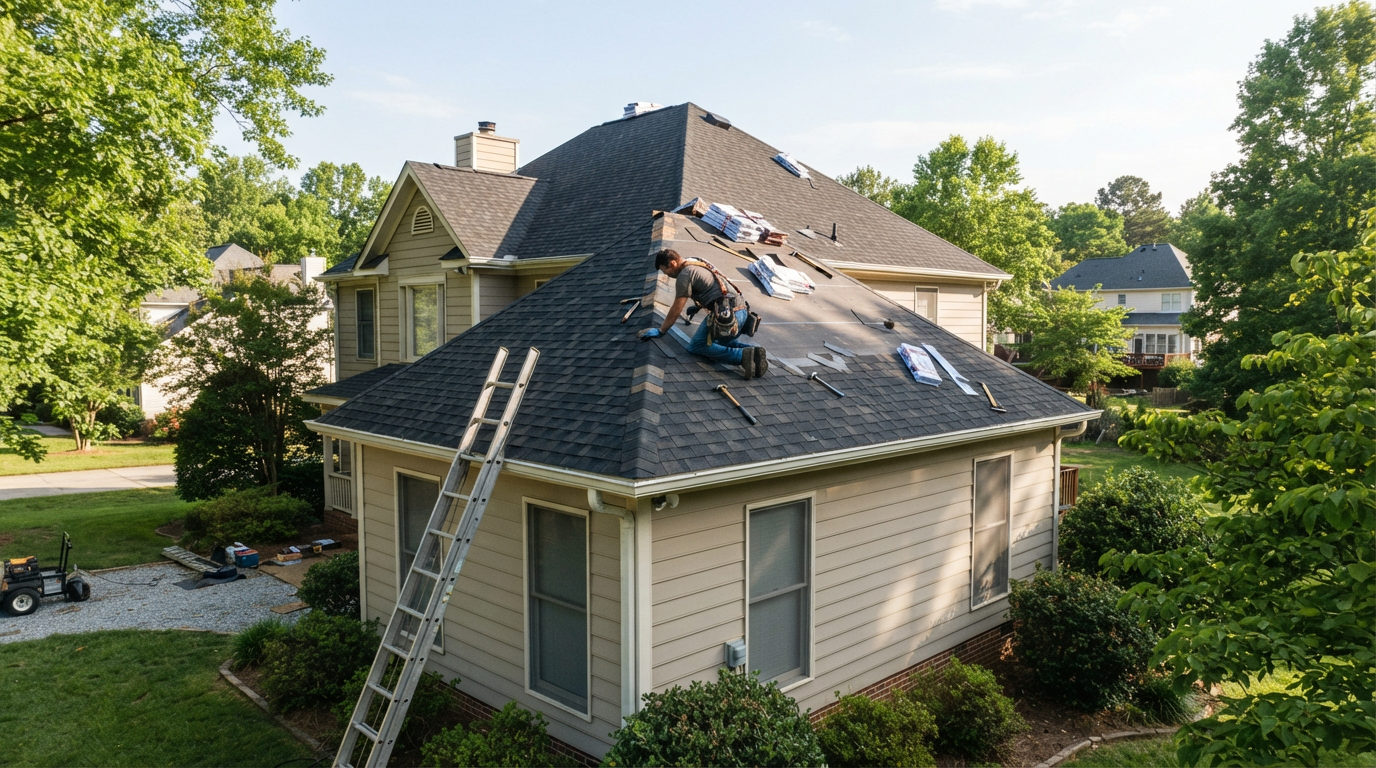
Average Cost of Roof Replacement in NC: What to Expect
After more than 30 years of protecting homes across North Carolina, we can tell you the question homeowners ask before any other — before shingle brands, before warranties, before color samples — is almost always the same: "What is this going to cost?" It's a fair question. The average cost of roof replacement in NC represents one of the largest single investments most people will ever make in their property, and the answers you'll find online range from vague to flat-out contradictory. In this guide, we'll break down what roofs actually cost in our state, why two neighbors can receive quotes thousands of dollars apart for similar-looking homes, and how to get a number you can genuinely plan around.
The Average Cost of Roof Replacement in NC: The Short Answer
Let's start with the number everyone wants. For a typical central North Carolina home — think a 2,000 to 2,500 square foot roof on a standard single-family layout — most full replacements using architectural asphalt shingles commonly land somewhere in the $9,000 to $16,000 range. Step up to metal, cedar, or slate, and the figure climbs accordingly. It's worth being honest about what any number like this really is: a planning range, not a quote. Roof pricing is genuinely project-specific, and anyone who gives you a firm number without setting foot on your roof is guessing.
Here's how the most common roofing materials compare at a high level. These are broad regional planning ranges reflecting what's consistently been reported across the industry in recent years — treat them as a starting point, not a promise:
| Roofing Material | Typical Installed Range (2,000–2,500 sq ft roof) | Best Suited For |
|---|---|---|
| 3-tab asphalt shingles | Roughly $7,000–$11,000 | Budget-conscious homeowners, rentals, simpler rooflines |
| Architectural asphalt shingles | Roughly $9,000–$16,000 | The majority of Triangle-area homes — the modern standard |
| Metal (standing seam or exposed fastener) | Roughly $20,000–$35,000+ | Longevity-focused homeowners, high-wind and coastal exposure |
| Cedar shake | Roughly $18,000–$30,000+ | Character homes and historic aesthetics |
| Slate or tile | $30,000 and up | Premium homes; requires structural assessment |
A quick note on "per square" pricing: roofers price by the square — a 10' x 10' section, or 100 square feet of roof surface. In central North Carolina, asphalt shingle projects (including tear-off, underlayment, and cleanup) commonly run in the neighborhood of $450 to $700 per square installed, with metal and premium materials commanding considerably more. Understanding this unit of measurement alone puts you ahead of most homeowners when reviewing bids.
How Roofers Actually Price a Roof (and How to Estimate Yours)
What Is a "Roofing Square," Exactly?
Because roofs slope, the surface area of your roof is always larger than the footprint of your house. That's why contractors measure in squares of actual roof surface rather than floor plan square footage. One square of standard asphalt shingles is typically installed with about three bundles, and a modest home often carries somewhere between 15 and 25 squares of roofing above it.
A Simple Five-Step Way to Estimate Your Own Roof Size
- Measure your home's footprint. Length times width for each section of the house, including attached garages and porches with roof coverage.
- Adjust for pitch. Steeper roofs have more surface area. As rough approximations: low-slope roofs add about 15–25%, medium walkable pitches like 6/12 or 7/12 add roughly 30–40%, and steep roofs can push past 50% over the footprint.
- Divide your adjusted number by 100. That's your square count.
- Apply a per-square rate. Using the $450–$700 per square range above as a regional frame of reference gives you a ballpark material-and-labor figure.
- Add a complexity buffer. Valleys, hips, dormers, skylights, chimneys, and multiple levels all add cutting, flashing, and labor time — often 10% or more.
It won't be exact, but it will get you close enough to recognize a suspiciously low — or suspiciously high — estimate when one lands in your inbox.
What Actually Drives the Cost to Replace a Roof in North Carolina
Material Choice: Where Price Meets Lifespan
The material you choose is the single biggest lever on your total. As widely published industry guidance reflects: standard 3-tab shingles generally deliver in the 15–25 year range; architectural shingles are commonly rated for 25–35 years or more and carry better wind ratings; metal roofing routinely spans 40 years and beyond; and slate or tile can last several generations — with a price tag to match. Paying more per square often means paying less per year of service life, which is why we walk every homeowner through the math rather than just the sticker price.
Size, Pitch, and Complexity
A simple gable roof with two planes and no obstructions is the cheapest configuration to replace. Add intersecting ridges, a steep pitch that requires staging and harnesses, or a two-story footprint that complicates debris handling, and labor hours climb. Two homes with identical square footage can receive materially different quotes purely because of geometry.
Tear-Off vs. Overlay
An overlay — installing new shingles over an existing layer — saves on tear-off labor and disposal, but it's generally a short-term tradeoff. Most quality-focused contractors recommend a full tear-off so the deck can be inspected, repairs can be made, and new underlayment and flashing can be installed correctly. Overlays also can shorten manufacturer warranties and hide problems until they're expensive to fix.
Hidden Decking Repairs: The Cost Nobody Budgets For
Here's the line item that surprises homeowners most: rotted or compromised roof decking. Once old shingles come off, soft plywood sometimes has to go with them. Sheathing replacement is typically quoted per sheet — often in the rough neighborhood of $75–$125 per sheet installed in many markets — and older homes frequently need several sheets. A trustworthy contractor will show you every sheet they replace with photos, and a thorough residential roofing estimate should spell out this per-sheet pricing before work begins so there are no surprises mid-project.
North Carolina Weather, Codes, and Ventilation
Our state throws everything at a roof — summer heat that bakes shingles, hurricane remnants and severe thunderstorms that test wind ratings, and the occasional winter ice event. Meeting North Carolina's wind-load expectations, upgrading underlayment, adding ice and water shield in vulnerable valleys, and correcting attic ventilation all affect the final number. Skimping on ventilation is a classic way to lower a bid — and a classic way to cook the lifespan right out of your new shingles.
Where in the State You Live
Regional labor markets matter. Roofing costs in the Triangle — Raleigh, Cary, Durham, Chapel Hill and surrounding towns — tend to run above more rural counties, while coastal communities face their own wind-rating and material requirements. Your town's permitting process and inspection requirements also influence timeline and cost, which is exactly why a locally rooted contractor is worth the conversation.
Repair or Replace? A Quick Decision Framework
Not every roof problem warrants a full replacement. Here's the practical framework we use when homeowners ask us to make the call:
- A repair usually makes sense when: the roof is relatively young, damage is isolated to one area (a few lifted shingles after a storm), flashing around a single chimney or vent has failed, or the deck shows no signs of sagging.
- Replacement usually makes sense when: the roof is approaching or past its expected lifespan, granules are collecting in gutters in quantity, shingles are curling or cupping across broad areas, leaks are appearing in multiple locations, or interior staining keeps returning after repairs.
When in doubt, get an honest on-roof inspection. A contractor who tells you that you can wait five more years — when they could have sold you a roof today — is a contractor worth keeping.
How to Get an Accurate Roof Replacement Quote
The single best way to control cost is to control the estimating process. Follow these steps and you'll compare bids on equal footing:
- Get more than one on-roof inspection. Estimates built from the driveway or from satellite imagery miss decking issues, ventilation gaps, and flashing details. Insist the inspector walk the roof.
- Demand an itemized estimate. Tear-off, disposal, underlayment, flashing, pipe boots, ridge vent, permits, and cleanup should each appear as their own line — not buried in a single lump sum.
- Compare material specs, not just brand names. Shingle lines come in different weights, wind ratings, and warranty tiers. Two quotes both saying "architectural shingles" can describe very different products.
- Verify licensing and insurance. Ask for proof of general liability coverage and workers' compensation before any work starts — not after a ladder is already on your house.
- Ask about workmanship coverage. Manufacturer warranties cover shingles; a strong contractor warranty covers installation. You want both, in writing.
Budgeting for the Project: Smart Options for NC Homeowners
If a replacement lands at the wrong moment financially, you have options beyond draining savings. Roof replacement financing lets many homeowners spread a project across manageable monthly payments instead of delaying a replacement and risking interior damage — we break down the available plans on our roofing financing options page. And if your roof was damaged by hail or a named storm, a portion of the project may qualify for an insurance claim; your contractor should be willing to document damage and meet your adjuster on site. One caution on timing: demand in NC spikes after major storm events and in peak spring and fall seasons. Scheduling during quieter windows won't necessarily change the price much, but it can dramatically improve your timeline and the attention your project receives.
Frequently Asked Questions About Roof Replacement Costs in NC
How long does a typical roof replacement take?
Most single-family homes we replace are completed in one to three working days, weather permitting. Larger footprints, steep pitches, extensive decking repairs, or heavy stone-coated and metal systems can extend the timeline. Your estimate should include a projected schedule — and a plan for what happens if rain rolls in mid-project.
Does homeowners insurance ever cover a full roof replacement in North Carolina?
Yes — but almost always for sudden, accidental damage such as wind or hail, not for gradual wear and age. It's also worth knowing that many North Carolina carriers have shifted policies toward actual cash value (ACV) roof coverage rather than full replacement cost value (RCV), which changes what the payout looks like. Read your policy's roof endorsement or ask your agent before storm season, not after.
Will a new roof add value to my home?
National remodeling-industry reporting has consistently ranked roof replacement among the better-performing exterior projects for recouped value at resale, and a documented, professionally installed roof removes a common objection during home inspections. Pair your new roof with complementary exterior work — siding, gutters, and trim — and the whole envelope presents stronger to future buyers.
Can I stay in my home during the replacement?
In almost all cases, yes. Roof replacement is loud — expect hammering and vibration — but it doesn't require you to vacate. Plan around pets and noise-sensitive family members, move vehicles out of the driveway, and cover items in the attic or remove them if practical.
How can I tell if my roof can be repaired instead of replaced?
Look at three things: age relative to the material's expected lifespan, whether the damage is localized or spreading, and whether the roofline still looks straight and healthy from the ground. One failed valley vent on an otherwise sound 10-year-old architectural shingle roof is a repair. Widespread curling and interior staining on a 22-year-old roof is a replacement wearing a repair costume.
Planning Your Roof Replacement With a Local Team You Can Trust
The average cost of roof replacement in NC is best understood as a range shaped by materials, roof complexity, and the quality of the crew doing the work — which means the estimate you choose matters as much as the number you're quoted. For over three decades, our team has replaced and restored roofs across central North Carolina with straightforward pricing, itemized estimates, and craftsmanship we put our name on. When you're ready to move from planning ranges to a firm, on-roof quote for your home, schedule your free roof inspection with our team — and let's get your questions answered before the next storm does the asking for you.