
Best Roofing Materials for North Carolina Climate | Mj's Roofing
Choosing the Best Roofing Materials for North Carolina Climate
Selecting the right roof for a home in North Carolina is a decision that carries significant weight. Unlike more temperate regions, North Carolina homeowners must contend with a volatile mix of high humidity, intense UV exposure, torrential tropical rain, and the occasional threat of hurricane-force winds. After serving the community for over 30 years, Mj's Roofing and remodeling has seen firsthand how different materials perform under these specific environmental stressors. Selecting the best roofing materials for North Carolina climate isn't just about curb appeal—it’s about structural integrity and long-term cost-effectiveness.
In this guide, we will analyze the most effective roofing solutions available today, examining how they stand up to the Tar Heel State’s unique weather patterns. Whether you are in the humid coastal plains or the variable Piedmont, understanding the science behind roofing performance is the first step toward a worry-free home.
The North Carolina Climate: A Stress Test for Your Roof
Before diving into specific materials, it is essential to understand what we are protecting against. North Carolina is characterized by a humid subtropical climate. This means our roofs are subjected to specific biological and physical threats that other regions might ignore.
1. High Humidity and Microbial Growth
The persistent moisture in NC air is a breeding ground for Gloeocapsa magma, a type of blue-green algae that leaves unsightly black streaks on roofs. Beyond aesthetics, this algae can trap moisture against the shingles, leading to premature decay of the roofing underlayment.
2. Extreme Temperature Fluctuations
North Carolina often experiences "thermal shock." This occurs when a roof surface heats up to 150°F during a mid-summer afternoon and then rapidly cools during a sudden thunderstorm. This cycle of expansion and contraction can cause lower-quality materials to crack, buckle, or lose granule adhesion.
3. High Winds and Storm Surge
From the coast to the Triangle, wind resistance is non-negotiable. The best roofing materials for North Carolina climate must be rated to withstand gusts that often exceed 90-110 mph during the peak of hurricane season. Our residential roofing services prioritize systems with high wind-uplift ratings to ensure your safety.
Comprehensive Analysis: Top Roofing Material Contenders
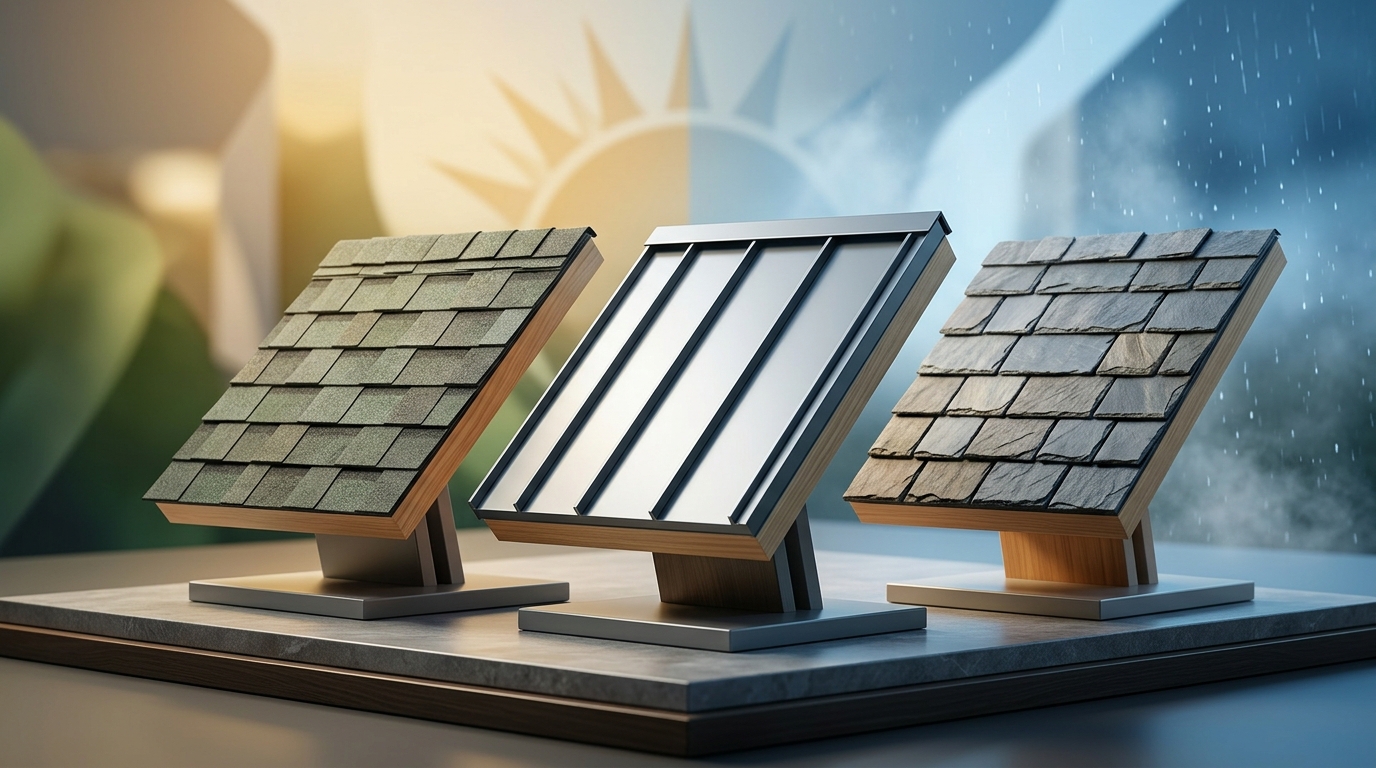
Architectural Asphalt Shingles: The Versatile Standard
Asphalt shingles remain the most popular choice in North Carolina, but not all shingles are created equal. For our climate, "Architectural" or "Laminated" shingles are the preferred choice over traditional 3-tab shingles.
- Pros: Excellent cost-to-performance ratio, available in various colors, and high fire ratings.
- Climate Fit: Modern architectural shingles are often treated with copper granules to resist the algae growth common in humid NC areas.
- Performance: High-end shingles can provide wind resistance up to 130 mph when installed with the correct nailing patterns.
Metal Roofing: The Long-Term Performance Leader
Metal roofing has seen a massive surge in popularity across North Carolina, particularly in coastal and rural areas. Both standing seam and corrugated metal panels offer distinct advantages for the southern heat.
- Solar Reflectance: Metal roofs are highly reflective. In the peak of an NC summer, a metal roof can reduce cooling costs by up to 25% by reflecting solar radiation back into the atmosphere rather than absorbing it into the attic.
- Durability: With a lifespan often exceeding 50 years, metal is a "one-and-done" solution for many homeowners.
- Wind Resistance: Interlocking panels make metal roofs incredibly difficult for high winds to penetrate.
Synthetic and Composite Slate
For homeowners who desire the luxury look of slate or cedar without the maintenance headaches or extreme weight, synthetic composites are an emerging leader. These materials are engineered to be impervious to moisture, making them ideal for the North Carolina humidity that would typically rot natural wood shakes.
Comparison Table: Roofing Materials at a Glance
| Material | Lifespan | Wind Rating | NC Climate Benefit |
|---|---|---|---|
| Architectural Shingles | 25-30 Years | Up to 130 mph | Algae resistance |
| Standing Seam Metal | 50+ Years | Up to 140+ mph | Maximum heat reflection |
| Synthetic Slate | 50 Years | High | Impact/Hail resistance |
The Mj's Roofing Selection Framework
Choosing the best roofing materials for North Carolina climate involves more than just picking a color. At Mj's Roofing and remodeling, we use a specific methodology to help homeowners make the right investment:
Step 1: Assessing Micro-Climates
Does your home sit under heavy tree cover? You’ll need advanced algae-resistant shingles. Is your home on a hill with high exposure? Wind-uplift ratings become the primary priority.
Step 2: Ventilation Engineering
The material on top of your roof only works if the system underneath is breathing. In NC, proper attic ventilation is critical to prevent the "oven effect" that cooks shingles from the inside out. We evaluate intake (soffit) and exhaust (ridge) vents during every consultation.
Step 3: Integrating Gutter Systems
A roof is only as good as its ability to shed water. High-intensity NC rainstorms require robust drainage. We often recommend pairing a new roof with high-capacity gutters and gutter guards to ensure water is diverted away from the foundation and fascia.
Data Point: Why UV Resistance Matters in the South
Research suggests that roofing materials in the Southern United States degrade up to 20% faster than those in Northern climates due to high UV index ratings. UV rays break down the bitumen (asphalt) in shingles, making them brittle. When selecting your material, looking for "Cool Roof" certified products can significantly extend the lifespan of your installation by keeping the surface temperature lower.
Protecting Your Investment
Regardless of the material you choose, the quality of installation is the ultimate variable. A metal roof installed without proper expansion fasteners or a shingle roof without the appropriate starter strips will fail in a North Carolina storm. For over 30 years, our team has refined a process that accounts for these local nuances, ensuring every home we touch is prepared for whatever the Atlantic sends our way.
Frequently Asked Questions
What is the most durable roofing material for North Carolina?
While architectural shingles are durable, Standing Seam Metal roofing is widely considered the most durable for the NC climate due to its superior wind resistance, longevity, and ability to reflect intense summer heat.
How often should I inspect my roof in NC?
We recommend a professional inspection at least once every two years, and ideally after any major storm event (hurricane or hail) to check for hidden damage that could lead to leaks during the humid rainy season.
Can I change from shingles to metal roofing?
Yes, most North Carolina homes can be converted to metal roofing. This often increases the home's value and provides better protection against the specific challenges of our local climate.
Ready to Secure Your Home?
Your roof is the most important component of your home's exterior envelope. Choosing the best roofing materials for North Carolina climate is a task that requires local expertise and a commitment to quality. Whether you are interested in the classic look of shingles or the high-performance benefits of metal, Mj's Roofing and remodeling is here to guide you.
Protect your North Carolina home today with the experts who have been doing it for three decades. Contact Mj's Roofing and remodeling today for a comprehensive consultation and professional recommendation tailored to your specific needs.