
Best Roofing Materials for North Carolina Humidity | Expert Guide
Choosing the Right Roof for the Old North State's Climate
North Carolina is a state of stunning geographic diversity, from the salt spray of the Outer Banks to the misty peaks of the Blue Ridge Mountains. However, regardless of where you live in our beautiful state, one environmental factor remains constant: humidity. High moisture levels and relentless heat create a unique set of challenges for homeowners. Selecting the best roofing materials for North Carolina humidity is not just about aesthetic appeal; it is a critical decision that impacts your home’s longevity, energy efficiency, and structural integrity.
At Mj's Roofing and remodeling, we have spent over 30 years protecting local homes. We have seen firsthand how the wrong materials can fail prematurely under the strain of 90% humidity mornings and 100-degree afternoons. Whether you are looking for residential roofing solutions or specialized commercial applications, understanding the interplay between moisture and material science is the first step toward a worry-free home.
The Silent Threat: How Humidity Damages Your Roof
To understand why certain materials outperform others, we must first examine the specific threats posed by the North Carolina climate. Humidity isn't just a comfort issue; it is a biological and physical catalyst for roof degradation.
1. Algae and Mold Proliferation
The most visible sign of humidity-related damage is the dark, unsightly streaks often seen on asphalt shingles. This is usually Gloeocapsa magma, a type of blue-green algae that thrives in warm, moist environments. While primarily a cosmetic issue initially, these colonies can eventually retain moisture and heat, shortening the lifespan of the shingles.
2. Thermal Expansion and Contraction
North Carolina often experiences "thermal shock." This happens when a roof reaches high temperatures under the midday sun and is then rapidly cooled by a sudden afternoon thunderstorm. In high-humidity environments, the air holds more heat, intensifying these temperature swings and causing materials to expand and contract aggressively, leading to cracks and structural fatigue.
3. Rot and Structural Decay
High humidity means moisture lingers. If your roofing system does not provide adequate breathability or moisture barriers, water vapor can become trapped in the attic or underlayment. This leads to dry rot in the wooden decking, compromising the safety of the entire structure.
The Best Roofing Materials for North Carolina Humidity: A Deep Dive
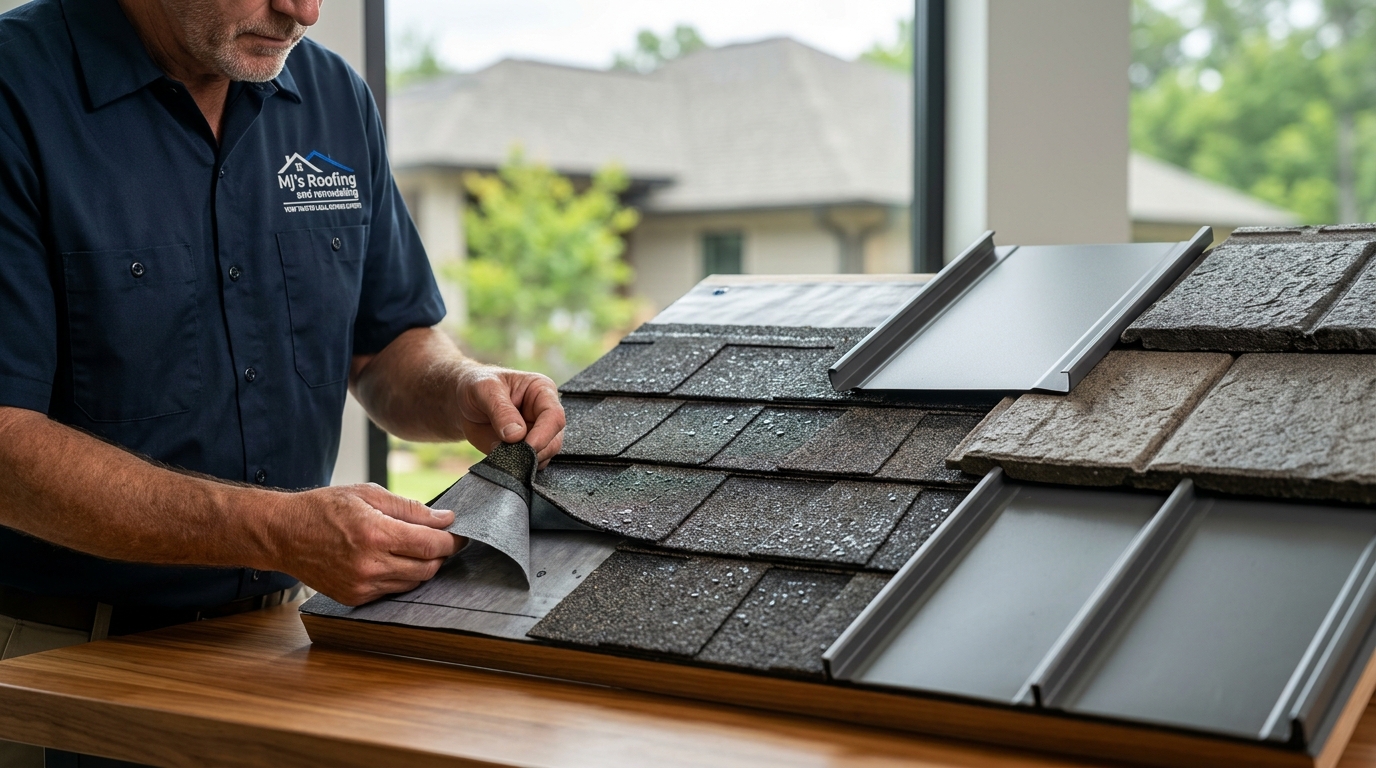
When evaluating the best roofing materials for North Carolina humidity, we look for three primary characteristics: moisture resistance, thermal reflectance, and biological immunity. Here are the top contenders that our team at Mj's Roofing and remodeling recommends for local homeowners.
1. Copper-Infused Asphalt Shingles (Algae-Resistant)
Asphalt shingles remain the most popular choice in North Carolina due to their cost-effectiveness. However, standard shingles often fall prey to algae in humid climates. The modern solution is Algae-Resistant (AR) shingles. These shingles are manufactured with copper-infused granules. When it rains, small amounts of copper are released, creating an environment where algae cannot survive. For many homeowners, this is the most balanced choice between budget and performance.
2. Standing Seam Metal Roofing
Metal is arguably the gold standard for humid environments. Unlike porous materials, metal is completely impervious to moisture, mold, and rot. Furthermore, standing seam metal roofs provide a "cool roof" effect, reflecting a significant portion of solar radiation back into the atmosphere. This reduces the heat load on your home, which is essential during North Carolina's humid summers. While the initial investment is higher, the 50+ year lifespan often makes it the most economical choice over time.
3. Slate and Synthetic Slate
Slate is a natural stone, making it inherently resistant to the biological growth that plagues organic materials. It is dense, non-porous, and can withstand the extreme humidity of the coastal plains. Because authentic slate is heavy and expensive, many North Carolinians are turning to synthetic slate. These composite materials offer the same moisture resistance and aesthetic appeal at a fraction of the weight and cost, making them a centerpiece of exterior remodeling projects that prioritize both style and durability.
4. Clay and Concrete Tiles
Common in more temperate or coastal regions, clay tiles are excellent for humidity. Their shape allows for natural airflow between the tile and the roof deck, which helps dissipate moisture and heat. Clay is also naturally fire-resistant and immune to rot. However, the weight of clay requires a reinforced roof structure, which is a factor our experts assess during initial inspections.
Comparing Material Performance in High-Humidity Environments
| Material | Moisture Resistance | Algae Resistance | Avg. Lifespan (NC) |
|---|---|---|---|
| AR Asphalt Shingles | Moderate | High (10-15 yrs) | 20-25 Years |
| Metal (Standing Seam) | Superior | Immune | 50+ Years |
| Synthetic Composite | High | High | 40-50 Years |
| Clay/Concrete Tile | High | Moderate | 50-100 Years |
The Importance of Advanced Ventilation Systems
Even the best roofing materials for North Carolina humidity will fail if the system cannot breathe. Ventilation is the unsung hero of roof longevity in the South. In a humid climate, your attic can become a sauna, trapping moist air that eventually condenses and rots your rafters.
The Balanced Ventilation Strategy
At Mj's Roofing and remodeling, we employ a balanced ventilation approach that includes:
- Intake Vents: Usually located at the soffits, these allow fresh, cooler air to enter the attic space.
- Exhaust Vents: Located at the ridge of the roof, these allow hot, moist air to escape naturally through convection.
- Vapor Barriers: High-quality synthetic underlayment provides an extra layer of protection that old-fashioned felt paper cannot match, especially in high-humidity zones.
Mj's Roofing and remodeling Humidity Resilience Framework
We don't just install roofs; we engineer protection. Our proprietary process for ensuring your roof stands up to the NC climate involves three critical steps:
Step 1: The Moisture Vulnerability Assessment
We evaluate your home’s micro-climate. Is your house shaded by heavy tree cover? Is it near a body of water? These factors increase local humidity and dictate whether you need higher-grade algae resistance.
Step 2: Component Matching
A roof is a system. We match your chosen material with the appropriate underlayment and flashing. For example, in humid areas, we often recommend ice and water shields in valleys where moisture tends to linger longest.
Step 3: Precision Installation
Poor installation creates "moisture traps." Our factory-trained teams ensure that every shingle and flashing piece is installed to promote water shedding and prevent the capillary action that pulls moisture into the home.
Maintenance: Keeping Your Humid-Climate Roof Healthy
Even with the best materials, North Carolina's environment requires vigilance. We recommend a bi-annual maintenance schedule to protect your investment.
- Gutter Cleaning: Clogged gutters keep water near the roofline, increasing the localized humidity and risk of rot. Check out our gutter services to ensure your drainage system is functioning perfectly.
- Debris Removal: Leaves and pine needles trap moisture against your shingles. Removing them prevents the localized "mulching" effect that destroys roofing materials.
- Professional Inspections: Once a year, have an expert check for cracked seals or minor damage that could allow humidity to seep into your decking.
Frequently Asked Questions
What is the most mold-resistant roofing material?
Metal roofing is the most mold-resistant material because it is non-porous and inorganic, providing no food source or damp crevices for mold or algae to grow.
How does humidity affect the lifespan of a roof in North Carolina?
Humidity can shorten a roof's lifespan by 20-30% if improper materials or poor ventilation are used. It accelerates the breakdown of organic components and promotes the growth of wood-destroying fungi.
Are dark-colored roofs bad for North Carolina's climate?
Dark roofs absorb more heat, which can be problematic in high humidity as it increases attic temperatures. If you choose a dark color, it is vital to use materials with high reflective granules or enhanced ventilation systems.
Can I install a new roof over my old one in a humid climate?
We generally advise against "layovers" in North Carolina. Trapping an old, potentially damp roof under a new one can lead to rapid rot and structural issues due to trapped moisture.
Conclusion: Protect Your Investment with Local Expertise
Choosing the best roofing materials for North Carolina humidity requires a blend of science, experience, and local knowledge. With over three decades of experience, Mj's Roofing and remodeling understands the unique environmental stressors of our state. From the Piedmont to the coast, we provide the craftsmanship and material selection necessary to keep your home dry and comfortable for decades.
Don't leave your home's protection to chance. For a comprehensive evaluation of your roofing needs and to explore our high-performance material options, contact our expert team today for a consultation. Let us help you build a roof that stands strong against the heat and humidity of the Carolinas.