
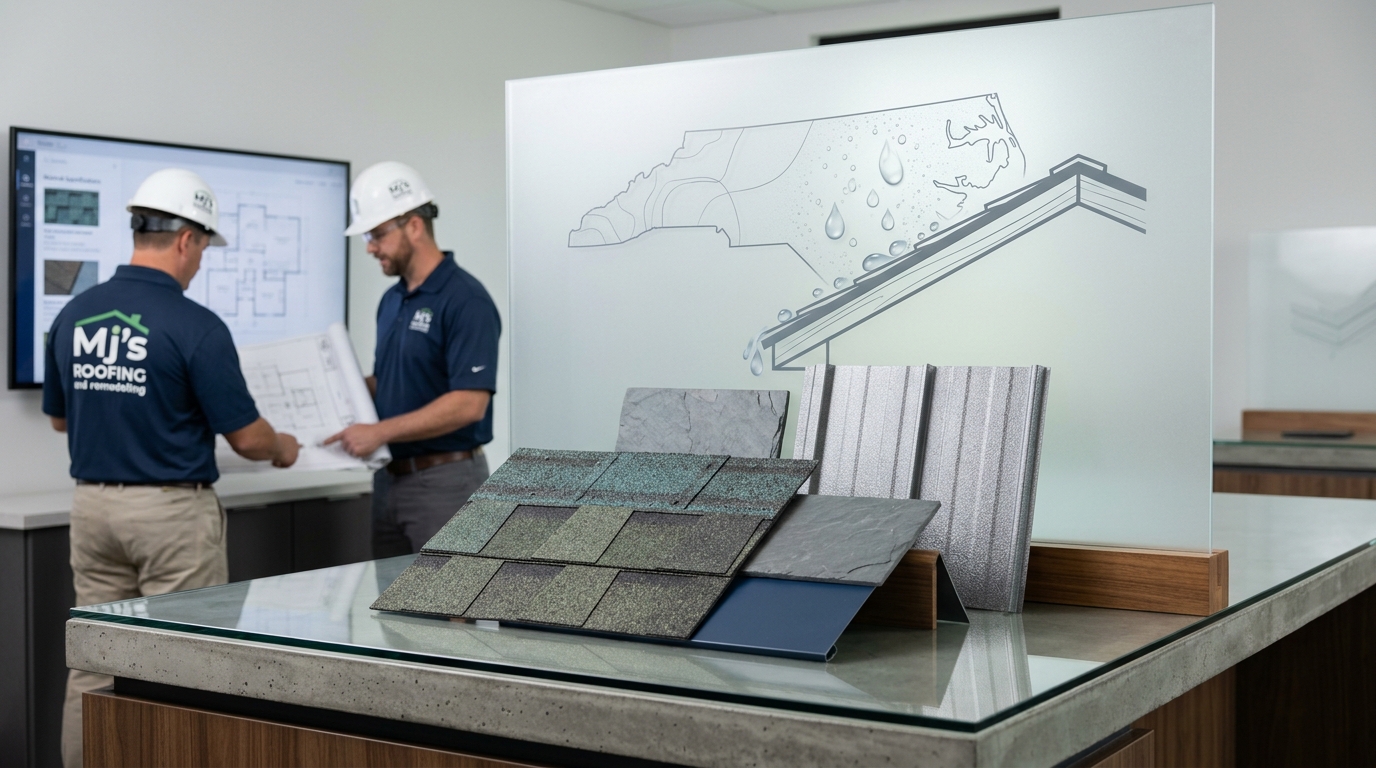
Best Roofing Materials for North Carolina Humidity: Expert Guide
In North Carolina, humidity isn’t just a weather statistic; it is a fundamental environmental challenge that dictates the lifespan of every structure in the state. From the salt-mists of the Outer Banks to the dense, heavy air of the Piedmont, homeowners must navigate a climate where moisture levels frequently exceed 70% relative humidity. When it comes to protecting your most valuable asset, choosing the best roofing materials for North Carolina humidity is not merely a matter of aesthetics—it is a matter of long-term structural integrity.
At Mj's Roofing and remodeling, we have spent over three decades observing how different materials respond to the unique North Carolina climate. We have seen roofs fail in under ten years because they weren’t equipped for the swamp-like conditions of a Southern summer, and we have seen others thrive for half a century. Our goal is to provide you with the technical knowledge necessary to make an informed decision for your home’s 20-year or 50-year future.
The Silent Threat: How Humidity Destroys a Standard Roof
Before selecting a material, it is critical to understand the enemy. In North Carolina, humidity impacts a roof through three primary vectors: biological growth, thermal expansion, and moisture entrapment.
Biological Proliferation (Algae and Mold)
The black streaks you often see on roofs across Raleigh, Durham, and Chapel Hill are not dirt or soot. They are a resilient cyanobacteria called Gloeocapsa Magma. This airborne algae thrives in high-humidity environments and feeds on the limestone filler used in modern asphalt shingles. Beyond being an eyesore, this biological growth traps moisture against the shingle surface, accelerating the degradation of the granules and leading to premature rot.
The Humidity-Heat Cycle (Thermal Shock)
North Carolina’s climate is characterized by intense heat spikes followed by sudden afternoon thunderstorms. This causes "thermal shock." When the humidity is high, the air holds more heat. If a roofing material is not designed to breathe or reflect this energy, it expands significantly. When the rain hits, the rapid cooling causes the material to contract. Over time, this cycle leads to cracks, warping, and the loosening of fasteners.
Moisture Entrapment
Humidity doesn't just attack from above; it attacks from below. High outdoor humidity levels can lead to condensation in your attic space if the roof is not properly ventilated. This trapped moisture can rot your roof deck (the plywood) and lead to mold growth in your insulation, compromising your indoor air quality and structural safety.
Top Contenders: The Best Roofing Materials for North Carolina Humidity
To withstand these conditions, a material must be non-porous, resistant to biological growth, and capable of handling rapid temperature shifts. Here are the top-performing residential roofing solutions for our region.
1. Algae-Resistant (AR) Architectural Asphalt Shingles
Standard shingles often fail in NC, but modern architectural shingles are a different breed. Leading manufacturers now incorporate copper-infused granules into the shingle matrix. Copper is a natural biocide; when it rains, copper ions are released across the roof, preventing algae from taking root. These are the most common choice for homeowners looking for a balance between cost and performance.
- Pros: Affordable, wide range of colors, 30+ year warranties.
- Cons: Still susceptible to thermal expansion if not ventilated correctly.
2. Metal Roofing (Standing Seam)
Many experts consider metal to be one of the best roofing materials for North Carolina humidity. Unlike asphalt, metal is completely non-porous. It does not absorb moisture, and it provides no organic matter for algae or mold to feed on. Furthermore, metal roofs reflect solar radiation, which helps keep the attic space cooler and reduces the moisture-holding capacity of the air inside your home.
- Pros: 50+ year lifespan, fire-resistant, highly reflective, 100% recyclable.
- Cons: Higher upfront cost, can be noisy during NC's heavy thunderstorms if not insulated properly.
3. Slate and Synthetic Slate
Natural slate is virtually impervious to moisture. In humid environments, it remains cool and stable. However, due to its weight and cost, many North Carolinians are turning to synthetic slate. Made from high-tech polymers, synthetic slate offers the same moisture resistance and aesthetic appeal without the need for structural reinforcement of the home.
- Pros: Extremely durable, classic aesthetic, immune to rot and insects.
- Cons: High labor costs for installation.
4. Concrete and Clay Tiles
Tiles are a staple in humid coastal regions for a reason. They are installed in a way that allows for a natural air cushion between the tile and the roof deck. This "above-sheathing ventilation" is incredibly effective at preventing moisture buildup and keeping the house cool during those 95-degree North Carolina afternoons.
Comparison: Materials vs. North Carolina Environmental Factors
| Material | Algae Resistance | Moisture Absorption | Life Expectancy | Cost Factor |
|---|---|---|---|---|
| Standard Asphalt | Low | Moderate | 15-20 Years | $ |
| AR Architectural Shingles | High | Low | 25-30 Years | $$ |
| Metal (Standing Seam) | Excellent | Zero | 50+ Years | $$$ |
| Synthetic Slate | Excellent | Zero | 50 Years | $$$$ |
| Clay/Concrete Tile | High | Low | 75+ Years | $$$$$ |
The Critical Role of Attic Ventilation in High-Humidity Zones
Choosing the right material is only 50% of the battle. Even the best roofing materials for North Carolina humidity will fail if the system cannot "breathe." At Mj's Roofing and remodeling, with over 30 years of local experience, we emphasize that a roof is a system, not just a surface.
In a humid climate, your attic acts as a heat and moisture trap. Without proper ventilation, the humidity from your showers, cooking, and the external air builds up under the roof deck. This leads to "dry rot," where the wood becomes brittle and eventually fails. We recommend a balanced system of intake vents (at the soffits) and exhaust vents (at the ridge) to ensure that air is constantly circulating, carrying moisture away before it can condense.
The MJ 5-Step Humidity-Resistance Protocol
When we approach a new project in the North Carolina region, we follow a rigorous methodology to ensure the roof can withstand the local climate:
- Moisture Audit: We inspect the current decking for signs of mold or structural weakness caused by existing humidity issues.
- Ventilation Calculation: We use industry-standard formulas to determine the exact square footage of venting required to keep the attic temperature within 15 degrees of the outdoor temperature.
- Synthetic Underlayment: We have moved away from traditional felt paper, which can absorb moisture and wrinkle. We use high-grade synthetic underlayment that acts as a secondary waterproof barrier.
- Algae-Shield Selection: We guide homeowners toward materials that specifically feature zinc or copper-infused granules or coatings.
- Precision Fastening: We ensure all flashings and fasteners are corrosion-resistant, as high humidity can accelerate the rusting of standard steel nails.
Maintenance for Humid Climates: A Proactive Approach
Even with the best materials, North Carolina's environment is aggressive. To maximize your investment, follow these three steps:
- Keep it Clean: Debris like leaves and pine needles trap moisture against the shingles. Regularly clearing your roof prevents localized rot.
- Annual Inspections: Have a professional check for any shingles that have lifted due to thermal expansion. This is especially important when serving local communities across the storm-prone central NC area.
- Gutter Maintenance: Ensure your gutters are clear so that water is shed away from the roof edge. Clogged gutters lead to water backing up under the shingles, a recipe for disaster in humid weather.
Frequently Asked Questions
How do I know if humidity is already damaging my roof?
Look for dark streaks (algae), curling shingle edges, or a musty smell in your attic. If your cooling bills have spiked unexpectedly, it may be a sign that your roof isn't ventilating properly, trapping humid heat above your ceiling.
Does a metal roof make my house hotter in NC?
Actually, the opposite is true. Metal reflects heat. While the metal itself gets hot to the touch, it doesn't store thermal energy the way asphalt does. With a proper air gap and ventilation, a metal roof is one of the most energy-efficient options for our climate.
Are copper-infused shingles safe for the environment?
Yes. The amount of copper ions released is very small—just enough to be toxic to microscopic algae but harmless to your lawn, pets, and the broader ecosystem.
Conclusion: Making the Right Choice for Your North Carolina Home
Living in North Carolina means embracing the beauty of the South, but it also means preparing for its meteorological demands. Whether you opt for the durability of standing-seam metal or the proven performance of algae-resistant architectural shingles, the key is professional installation and a holistic approach to moisture management.
Don't let the humidity dictate the lifespan of your home. If you are concerned about the state of your current roof or are planning a replacement, the team at Mj's Roofing and remodeling is here to help. With three decades of expertise in the local market, we know exactly what it takes to keep your home dry and comfortable for years to come.
Ready to protect your home? Contact Mj's Roofing and remodeling today for a comprehensive roof health audit and discover the best solutions for your specific needs.