
Best Durable Roofing Materials for North Carolina Humidity
Why Your Roof Choice Matters in the North Carolina Climate
In the Tar Heel State, our humidity isn't just a comfort issue—it's a structural threat. With North Carolina's average relative humidity levels often hovering between 70% and 90% during the peak summer months, your roof is constantly under siege from moisture, mold, and thermal expansion. Choosing the right durable roofing materials for North Carolina humidity is not merely an aesthetic decision; it is a critical investment in the longevity and safety of your home.
At Mj's Roofing and remodeling, we have spent over 30 years of experience observing how different materials react to the unique atmospheric pressures of the Southeast. From the salt air of the coast to the heavy moisture of the Piedmont, the battle against humidity-induced rot and algae is constant. This guide provides a deep dive into the science of roofing durability in high-moisture environments, helping you choose a system that will protect your property for decades.
The Science of Humidity: How It Destroys Standard Roofs
To understand which materials are the most durable, we must first understand the enemies they face in North Carolina. Humidity acts as a catalyst for several destructive processes:
1. Gloeocapsa Magma (Black Algae)
Those black streaks you see on many roofs across Raleigh, Durham, and Apex are not dirt. They are a hardy form of cyanobacteria called Gloeocapsa Magma. This bacteria thrives in humid environments and feeds on the limestone filler used in modern asphalt shingles. Over time, it weakens the shingle structure and reduces its ability to reflect UV rays.
2. Vapor Pressure and Trapped Moisture
High humidity creates high vapor pressure. If a roof is not properly ventilated, moisture can become trapped in the attic space, leading to wood rot in the decking and rafters. This moisture can also cause shingles to curl or "cupping," which breaks the adhesive seal and makes the roof vulnerable to wind damage.
3. Thermal Shock
North Carolina often experiences rapid temperature swings—hot, humid afternoons followed by cooling thunderstorms. This leads to "thermal shock," where roofing materials expand and contract rapidly. Brittle materials will crack under this stress, making moisture resistance even more difficult to maintain.
Top-Rated Durable Roofing Materials for North Carolina Humidity
When selecting the best residential roofing materials, we look for properties like low water absorption, copper-infused granules for algae resistance, and superior ventilation compatibility.
1. Architectural Asphalt Shingles (Algae-Resistant)
Not all asphalt shingles are created equal. For North Carolina, we recommend architectural (or dimensional) shingles specifically treated with algae-resistant granules. These shingles contain copper or zinc particles that leach out slowly over time, killing algae spores before they can take root.
- Pros: Cost-effective, wide variety of styles, easier to repair.
- Cons: Shorter lifespan than metal or slate (25-30 years).
- Humidity Performance: High, provided they are the "AR" (Algae Resistant) variety.
2. Standing Seam Metal Roofing
Metal is arguably one of the most durable roofing materials for North Carolina humidity. Unlike shingles, metal is non-porous. It does not absorb moisture, nor does it provide a food source for algae or mold. Standing seam panels, in particular, are excellent because the fasteners are concealed, preventing water from seeping into screw holes over time.
- Pros: 50+ year lifespan, reflects solar heat (lowering cooling bills), highly resistant to rot.
- Cons: Higher upfront cost.
- Humidity Performance: Exceptional. Metal handles moisture and rapid temperature shifts without structural fatigue.
3. Synthetic Slate and Composite Tiles
For homeowners who want the look of natural slate without the weight or the price tag, synthetic composites are a revolutionary choice. These materials are often made from recycled rubbers and plastics, making them entirely impervious to water absorption.
- Pros: Stunning aesthetics, Class 4 impact resistance, no moisture absorption.
- Cons: Requires specialized installation expertise.
- Humidity Performance: Very High. They are immune to the biological growth that plagues organic materials.
Comparing Roofing Materials for the NC Climate
| Material | Expected Lifespan (NC) | Humidity Resistance | Maintenance Needs |
|---|---|---|---|
| 3-Tab Asphalt | 15-20 Years | Low | High (Algae cleaning) |
| Architectural Shingles | 25-30 Years | Moderate-High | Moderate |
| Standing Seam Metal | 50+ Years | Exceptional | Low |
| Synthetic Composite | 50 Years | Exceptional | Very Low |
The Importance of Advanced Underlayment and Ventilation
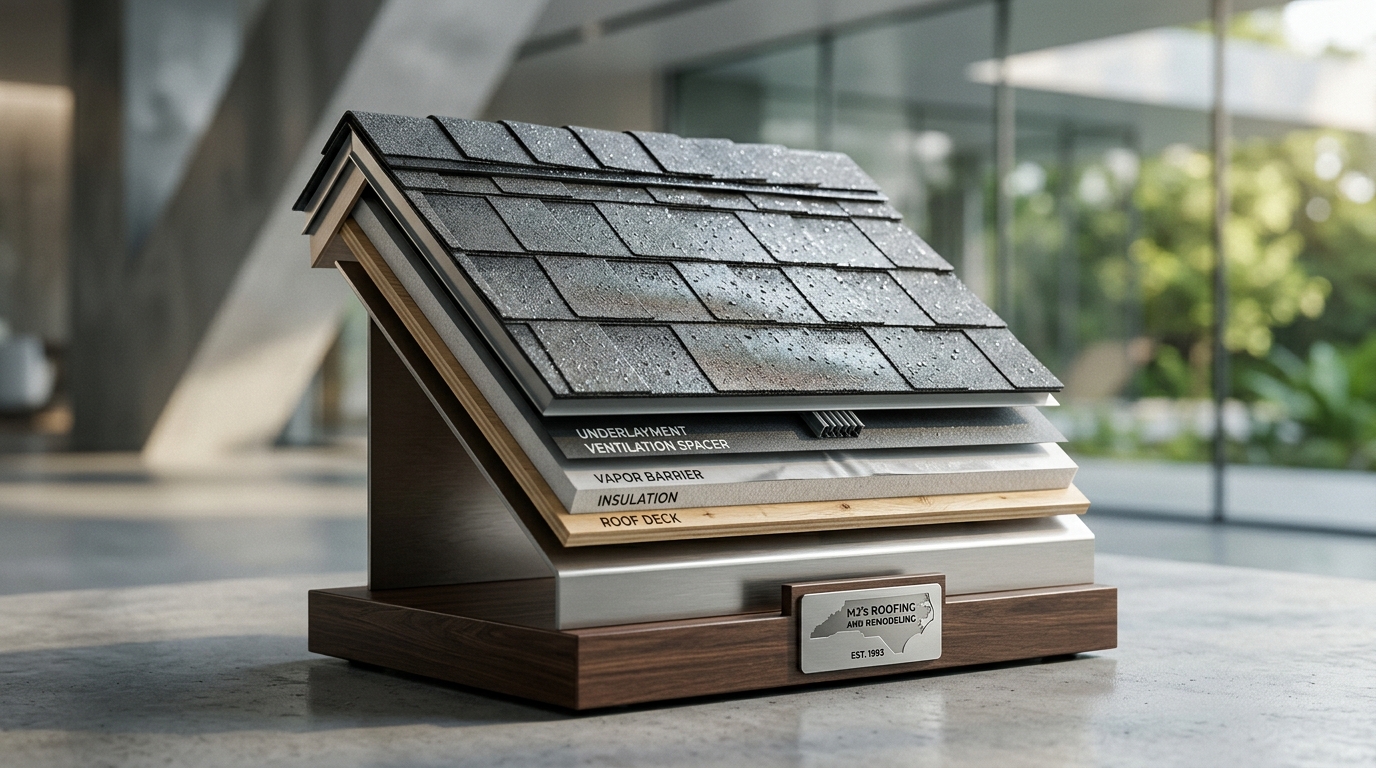
Selecting durable roofing materials for North Carolina humidity is only half the battle. The components beneath the surface—the underlayment and the ventilation system—are what truly determine if a roof will survive the Raleigh or Cary humidity levels.
Synthetic Underlayment vs. Felt Paper
Traditionally, roofers used felt paper (tar paper). However, in high humidity, felt paper can absorb moisture and wrinkle, causing the shingles above it to lay unevenly. At Mj's Roofing and remodeling, we utilize high-performance synthetic underlayments. These materials act as a secondary water barrier that does not rot or degrade when exposed to the ambient moisture common in North Carolina.
Balanced Ventilation Systems
Without a balanced intake (soffit vents) and exhaust (ridge vents) system, your attic becomes a sauna. This heat and moisture bake the shingles from the inside out, effectively cutting the lifespan of your roof in half. A properly ventilated roof ensures that the temperature of the roof deck remains close to the outdoor temperature, preventing condensation and rot.
Mj's Step-by-Step Methodology for High-Humidity Installations
We don't just nail down shingles; we engineer a defense system. Here is our process for ensuring maximum durability in NC:
- Comprehensive Deck Inspection: We check for existing moisture damage or delamination in the plywood. Even the best shingles won't last on a compromised deck.
- Ice and Water Shield Application: We apply self-adhering membranes in valleys and around penetrations where moisture is most likely to pool.
- Algae-Resistant Shingle Selection: We prioritize products with high copper content to prevent those unsightly black streaks.
- Precision Flashing: We use high-grade metal flashing at all joints and chimneys to ensure a watertight seal against heavy North Carolina rain and humidity.
- Ventilation Audit: We calculate the exact square footage of ventilation needed to keep your attic dry and cool.
Our commitment to these details is why we are considered a leading expert in exterior remodeling across the region.
Maintenance Tips for Humid Climates
Even with the most durable materials, North Carolina's environment requires proactive care:
- Keep Gutters Clear: Clogged gutters lead to standing water at the roof edge, which can wick into the fascia and roof deck.
- Trim Overhanging Branches: Shade keeps the roof damp for longer, accelerating algae and moss growth. It also prevents airflow that helps the roof dry.
- Annual Inspections: Catching a small seal failure early can prevent a massive rot issue caused by trapped humidity.
Frequently Asked Questions
What is the best roof for high humidity?
Metal roofing is widely considered the best for high humidity because it is non-porous and naturally resistant to algae and mold. However, high-quality architectural shingles with algae-resistant granules are a great, more affordable alternative.
How does humidity affect roof lifespan?
In high-humidity areas like North Carolina, roofs can degrade 20-30% faster than in dry climates if not properly ventilated. Moisture leads to rot, shingle curling, and biological growth that eats away at the materials.
Do metal roofs make the house hotter in NC?
No. In fact, metal roofs with reflective coatings (Cool Roof technology) can reflect more solar radiation than asphalt, often lowering cooling costs during the hot, humid North Carolina summers.
Should I power wash algae off my roof?
Never power wash an asphalt roof. High-pressure water can strip the protective granules off the shingles. Instead, use a professional soft-wash solution designed to kill the algae without damaging the durable roofing materials.
Protect Your Home with MJ's Roofing and Remodeling
Choosing the right roof means understanding the local environment. For over three decades, Mj's Roofing and remodeling has been the trusted voice for homeowners seeking durable roofing materials for North Carolina humidity. We don't just provide a service; we provide peace of mind that your home is protected by the best craftsmanship and the most resilient materials available today.
Ready to upgrade your home's defense against the NC climate? Contact us today for a comprehensive roof assessment and see why our quality craftsmanship stands the test of time.