
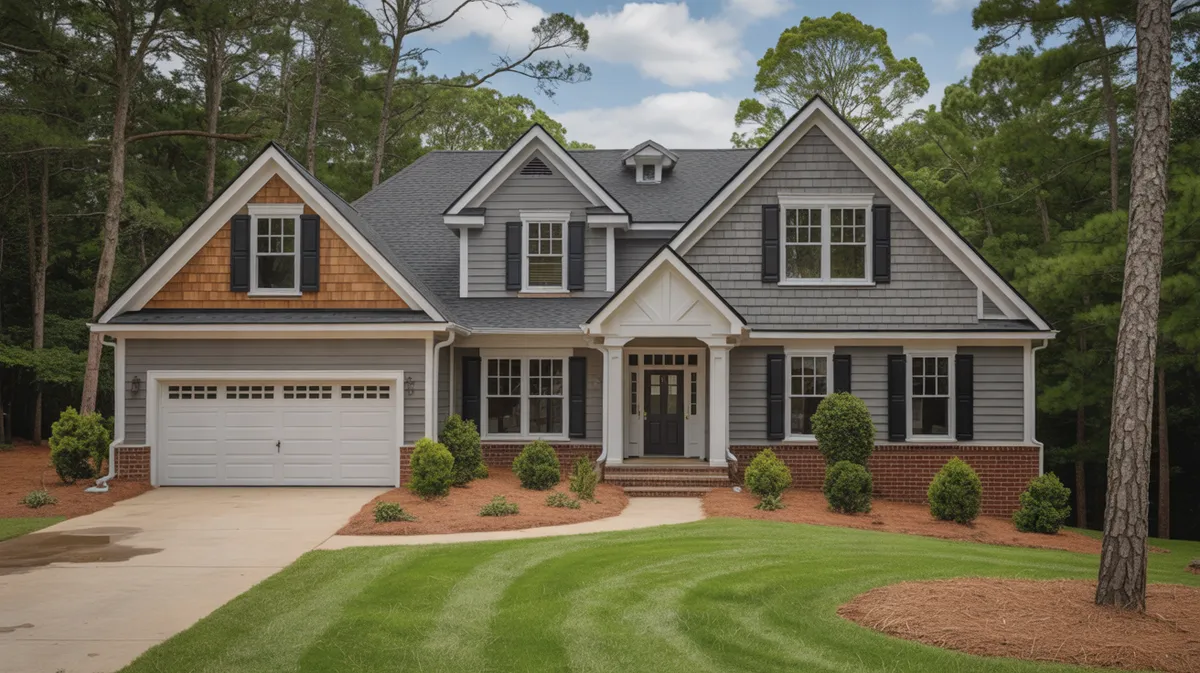
Home Remodeling Trends for North Carolina Houses in 2025
After more than three decades of working on houses across central North Carolina — from established Triangle neighborhoods to the fast-growing communities around Clayton, Dunn, and Apex — we have learned a simple truth about remodeling: what wins on national design shows does not always win in a Carolina August, a March hailstorm, or a hurricane remnant pushing up from the coast.
That is why we think about home remodeling trends for North Carolina houses differently than most trend roundups. We are not reporting what is popular on inspiration boards. We are watching what holds up on job sites, what insurers are asking for, and what homeowners are still happy about five years later. If you are planning a full exterior overhaul, our exterior remodeling services bring roofing, siding, gutters, and painting together under one plan — which is exactly how the trends below should be approached.
Here is our ground-level guide to the trends shaping NC homes right now, a practical framework for choosing among them, and the regional nuances most national articles skip entirely.
Why North Carolina Homes Follow Their Own Remodeling Playbook
National trend lists are written for everyone, which means they are written for no one in particular. North Carolina has a specific set of forces that reshuffle the priority list for any exterior or whole-home project:
- Humidity is the quiet budget-killer. Our long, damp summers swell cheap materials, feed mildew, and punish anything that traps moisture against the structure. A material that performs beautifully in a dry climate can fail here in a fraction of its expected life.
- Storm risk is now written into the paperwork. In the years since Hurricanes Matthew and Florence, insurers across the state have paid closer attention to roof age, wind ratings, and water management. Remodeling decisions increasingly carry insurance consequences, not just aesthetic ones.
- The housing stock spans a century. A 1960s ranch in Burlington, a 1990s two-story in Cary, and a new build in Clayton respond to the same trend in very different ways. The age of your house often matters more than the trend itself.
- One state, three climates. The coastal plain, the Piedmont, and the mountains each test a house differently — wind and driving rain in the east, heat and hail in the central corridor, freeze-thaw and elevation wind in the west.
Keep those four forces in mind as you read the trends below, because each one is really a response to them.
The Top Home Remodeling Trends for North Carolina Houses Right Now
1. Storm-Resilient Exteriors Have Become the New Status Symbol
The biggest shift we have seen in recent years is not a color or a material — it is a mindset. Homeowners now ask about impact ratings, underlayment, and roof attachment before they ask about paint swatches. Part of this is insurer-driven: many carriers offer premium credits for impact-rated shingles (those tested under the UL 2218 standard), and others have tightened underwriting on roofs past a certain age. Part of it is simply memory — enough neighbors have been through a damaging storm that resilience now reads as a design feature, not a chore.
On real projects, this trend shows up as:
- Architectural or impact-resistant shingles instead of basic three-tab
- Synthetic underlayment and added barriers in vulnerable valleys and eaves
- Proper drip edge, flashing, and gutter integration so water is managed, not just shed
- Hip roof geometry considered during a full re-roof, since hip shapes handle wind better than long gable ends
Sequencing note: if your roof is more than 15 years old, replacing it before other exterior work is almost always the right call. Siding, gutters, and even interior ceiling repairs all tie into the roofline, and our residential roof replacement projects routinely become the anchor for the rest of an exterior remodel.
Metal vs. architectural shingles: a quick reality check
- Metal roofing — pros: long service life (commonly measured in decades, often 40 or more years), excellent shedding of pine straw and leaves, strong wind performance, and a distinctive look that pairs well with modern and farmhouse palettes.
- Metal roofing — cons: higher upfront cost, potential denting from large hail, thermal expansion noise if not installed correctly, and a smaller pool of qualified installers.
- Architectural shingles — pros: lower initial cost, broad style and color selection, easy repairs, and proven performance across NC neighborhoods.
- Architectural shingles — cons: shorter lifespan than metal, more hail vulnerability at the low end of the quality range, and gradual granule loss in heavy sun.
2. Energy Efficiency Designed for Humidity, Not Just Heat
National efficiency advice tends to fixate on cold climates. In North Carolina, the enemy is a combination of heat and moisture, and the highest-leverage upgrades reflect that:
- Attic ventilation and air sealing. In a humid climate, a poorly ventilated attic is not just hot — it is a condensation and mold risk. Balanced intake and exhaust ventilation is one of the most cost-effective upgrades we recommend.
- Cool-color and reflective shingles. Reflective granule technology has improved enough that homeowners no longer have to choose between a dark palette and a hot attic.
- Insulated sheathing and backed siding. Adding a continuous insulation layer during a siding replacement smooths interior temperatures and tames the drafts that come with older wall assemblies.
- Moisture-aware comfort planning. More homeowners are pairing exterior upgrades with heat pumps and whole-home dehumidification, because in NC comfort is as much about humidity as temperature.
3. Fiber Cement and Engineered Siding Are Taking the Lead
Vinyl still earns its place on tight budgets, but the center of gravity in North Carolina siding has clearly shifted toward fiber cement and engineered wood. The reasons are climate-specific: fiber cement shrugs off humidity, holds paint for years longer than most alternatives, and resists the warping that thin vinyl can show on sun-baked western walls. Engineered wood delivers a real-wood look with treated resistance to rot and termites — a genuine concern in our region.
The trade-off is installation quality. These heavier panels demand correct flashing, proper clearances from grade and rooflines, and experienced crews. When we plan siding installation and replacement, the substrate and water-management details matter more than the brochure — get those wrong and any material fails early; get them right and fiber cement routinely delivers multi-decade service backed by strong manufacturer warranties.
4. Darker, Grounded Exterior Palettes
Charcoal, deep forest green, iron-ore black, and warm earth tones have displaced the cool grays of the last decade, usually paired with black windows, mixed materials, and simplified trim. Done well, these palettes make landscaping pop and photograph beautifully.
Two practical notes from the field: first, large dark surfaces absorb heat, so in sun-heavy exposures we recommend ventilated assemblies and quality finishes — or a dark body color balanced with a lighter roof and trim to break up the heat load. Second, dark colors show fading and water spotting differently than lighter ones, which is another reason paint-hold matters when choosing siding material. Here, fiber cement and premium finishes earn their premium.
5. Indoor–Outdoor Living, Carolina Style
Screened porches, covered rear patios, tongue-and-groove ceilings, outdoor fans, and wide opening wall systems remain among the most requested projects in our service area — and it makes sense. A screened porch in North Carolina is usable roughly three seasons of the year, which is more than most homeowners get from a spare bedroom.
The hidden half of this trend is water management. A covered porch that is not integrated with the roofline, gutters, and drainage becomes a chronic water problem aimed straight at your foundation. Any outdoor-living project should be planned alongside gutter sizing, downspout routing, and grading — the unglamorous details that decide whether the space ages well.
6. Aging in Place and the Low-Maintenance Forever Home
Another quiet revolution: homeowners planning to stay put for 20-plus years are remodeling for maintenance freedom as much as style. That means main-floor primary suites, wider openings, zero-step entries — and, just as importantly, exteriors that do not demand constant attention: durable siding, well-sized gutters with guards, and roofing chosen for lifespan rather than the lowest bid. Trend lists call this “aging in place.” On job sites, we call it building a house that takes care of you back.
A Five-Step Framework for Choosing the Right Trend for Your House
Trends are inputs, not instructions. Here is the sequence we walk through with homeowners before any exterior project:
Step 1: Audit your biggest vulnerability first
Walk your property after the next heavy rain. Note where water pools, where gutters overflow, which walls take the weather. Your house is telling you its priority list; the trend list should follow it, not lead it.
Step 2: Match the trend to your microclimate
A metal roof is a different decision in a hail-prone corridor than under heavy tree canopy. A dark south-facing wall is a different decision than a shaded northern one. Adjust every trend for your lot, your tree cover, and your exposure.
Step 3: Run the cost-versus-value reality check
Consult the remodeling industry’s annual cost-versus-value research before committing: year after year, exterior curb-appeal projects — roofing, siding, entry doors, garage doors — recoup a larger share of their cost at resale than most upscale interior renovations. In a state growing as fast as North Carolina, that pattern tends to hold locally as well.
Step 4: Sequence projects in the right order
Roof first, then siding, then gutters and trim, then paint. Reversing that order means re-work, warranty headaches, and paying twice for the same wall. A contractor who plans sequencing for you is worth more than one who quotes each piece in isolation.
Step 5: Phase the budget honestly
A phased plan executed correctly beats an ambitious plan executed cheaply. Decide what must happen this year (usually water management and the roof) versus what can wait, and make sure each phase is complete and watertight on its own.
Cost vs. Value: Where Remodeling Dollars Work Hardest
Every homeowner asks some version of the same question: which of these trends is actually worth the money? Exact returns vary by market and house, but the industry’s recurring cost-versus-value findings give a reliable directional answer — exterior, curb-appeal work consistently outperforms interior-only luxury upgrades at resale:
| Project | Value Profile | Why It Works in North Carolina |
|---|---|---|
| Roof replacement | Strong | Storm protection, insurance relevance, and the single biggest curb-appeal surface on the house |
| Siding replacement | Strong | Humidity resistance and a dramatic visual reset buyers notice from the street |
| Entry and garage doors | Strong | Low relative cost with an outsized effect on first impressions |
| Screened porch or covered outdoor space | Moderate to strong | Deep local demand — outdoor living is a lifestyle fit in NC, not a fad |
| High-end interior-only upgrades | Variable | Great for personal enjoyment, but returns depend heavily on the neighborhood and buyer pool |
Material Matchup: Siding Choices for North Carolina Weather
Because siding is where humidity does its worst damage, here is how the three dominant materials compare for NC houses:
| Material | Humidity & Moisture | Maintenance | Storm Performance | Relative Cost |
|---|---|---|---|---|
| Vinyl | Does not rot, but can trap moisture behind panels if detailed poorly | Low; occasional washing | Can crack in hail and high wind at lower grades | $ |
| Fiber cement | Excellent; dimensionally stable through humid swings | Moderate; long paint cycles | Strong impact and wind resistance | $$ |
| Engineered wood | Treated for rot and termite resistance | Moderate; periodic repainting | Good, with proper flashing and clearances | $$ |
One State, Three Climates: Regional Remodeling Notes
Coastal Plain and Sandhills
Wind uplift, driving rain, and humidity dominate. Prioritize roof attachment, sealed roof edges, impact-rated coverings, and gutter systems sized for heavy downpours. Moisture also argues for fiber cement over wood-heavy palettes closer to the coast.
Piedmont and the Triangle
The central corridor sees intense summer sun, occasional hail, and explosive growth. Remodeling here is often about keeping an older housing stock competitive with new construction — exterior refreshes, modern palettes, and energy upgrades that make a 1980s house feel current.
Mountains and Foothills
Elevation brings wind, freeze-thaw cycles, and heavier precipitation. Added roof barriers at eaves, robust flashing, and materials that tolerate moisture swings matter more than in the flatlands. Heavy tree cover also makes gutter protection and roof shedding a bigger deal.
Four Trend-Chasing Mistakes We See Every Year
- Copying a national trend without the climate filter. The internet does not know what a Carolina August does to a poorly ventilated dark wall assembly. Filter everything through humidity and storm risk.
- Doing cosmetic work over a failing roof. New siding over a tired roof deck is a paid do-over waiting to happen. Fix the water envelope first.
- Skipping the drainage plan. Beautiful exteriors fail at the seams — flashing, gutters, grading. Budget for the unglamorous parts.
- Choosing the lowest bid over the best plan. The cheapest number usually reflects the shortest scope of work, not the best value. Compare scopes line by line, not just totals.
Frequently Asked Questions
What remodeling projects add the most resale value to North Carolina homes?
Exterior projects lead consistently: roof replacement, siding replacement, and entry-door upgrades are perennial top performers in national cost-versus-value research, and North Carolina’s rapid population growth keeps curb appeal at a premium. Outdoor living spaces also perform well here because screened porches suit the climate nearly year-round.
When is the best time of year to schedule exterior remodeling in NC?
Exterior work happens year-round in North Carolina, but spring and early fall book up fastest because conditions are mild and homeowners are prepping for storm season. If you want a summer or hurricane-season completion, schedule in late winter. Roof work can often proceed in colder months when materials are handled properly.
Should I replace my roof before or after other remodeling projects?
Before — in almost every scenario. The roof sets the water-management baseline for everything below it: siding transitions, gutter runs, and trim details all terminate at the roofline. Replacing the roof first prevents damage to new siding and eliminates the cost of redoing tie-in work later.
Are dark exterior colors a bad idea in North Carolina’s heat?
Not necessarily, but they deserve respect. Dark surfaces absorb more solar heat, so plan for a well-ventilated roof assembly, quality finishes rated for fade resistance, and lighter trim or roofing to break up large dark planes. On shaded lots, dark palettes perform with far fewer compromises.
How long do modern siding materials last in North Carolina’s climate?
With correct installation and flashing, fiber cement commonly delivers multi-decade service with long paint cycles, engineered wood typically lasts several decades with periodic maintenance, and quality vinyl can serve for decades as well — though thinner grades fade and crack faster under intense sun and hail. Installation detail matters as much as the material itself.
The Bottom Line: Remodel for Carolina, Not for the Algorithm
The best home remodeling trends for North Carolina houses share one DNA strand: they respect humidity, heat, and storms while still delivering the style that makes a house feel like home. Storm-resilient roofing, humidity-smart siding, water-managed outdoor living, and low-maintenance forever-home design are not fads — they are the local expression of national trends, refined by three decades of North Carolina weather.
If you are weighing any of these projects, start with a conversation rather than a shopping list. Our team at MJ’s Roofing and Remodeling has spent more than 30 years protecting and upgrading homes across the region, and we are happy to walk your property, flag your biggest vulnerabilities, and help you sequence the work so every dollar counts. Book a free exterior assessment and let’s turn the trends that fit your house — not the internet’s — into a plan.