
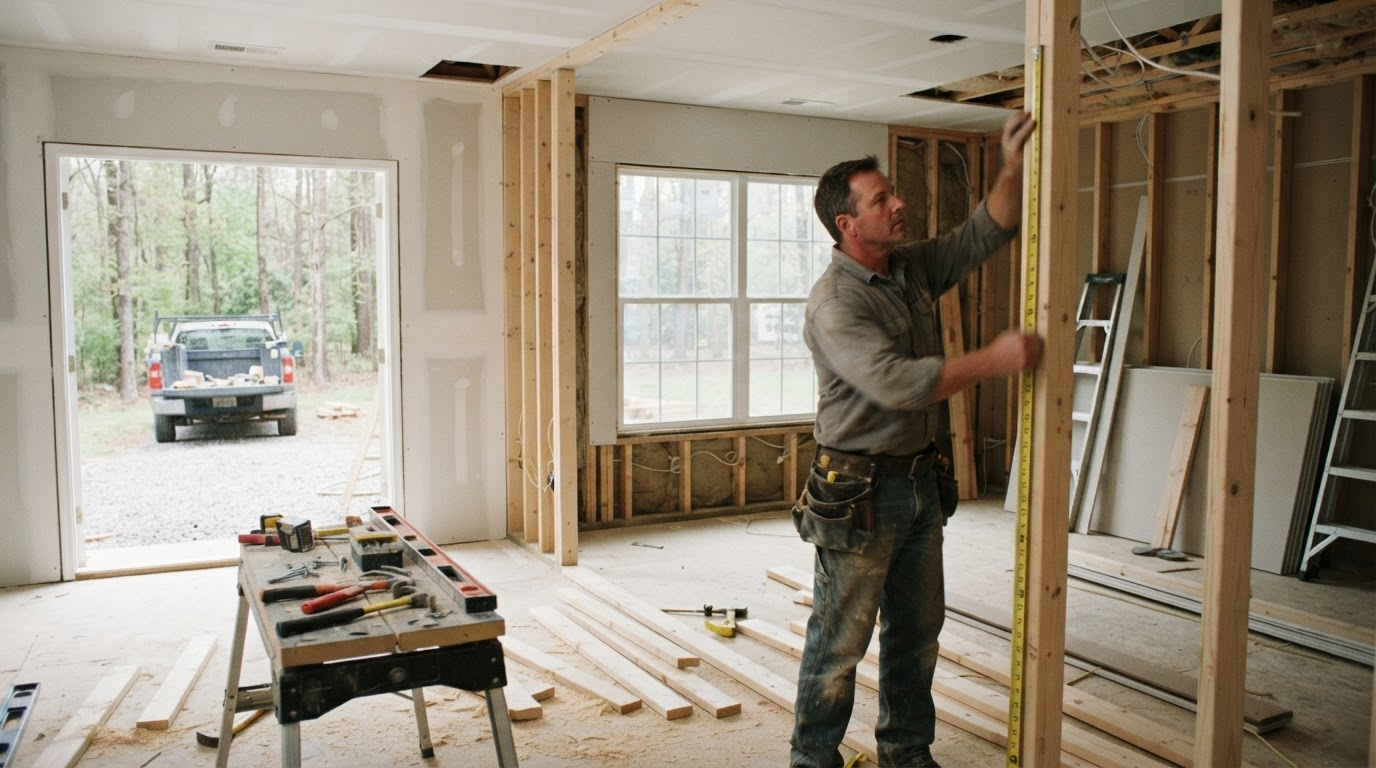
How to Choose a Reliable Home Remodeling Contractor in NC
Every few weeks, someone calls us to fix a project we didn't build. A roof that was "replaced" two seasons ago and already leaks over the garage. Siding installed so carelessly it's warping in the Carolina humidity. A deposit paid, a crew gone quiet. After more than three decades of roofing and remodeling homes across North Carolina — from Apex and Cary to Durham and Dunn — we can say this with real confidence: the most expensive remodeling decision you'll ever make isn't which shingle, siding, or paint color you pick. It's who you pick. That's exactly why we've put together this guide on how to choose a reliable home remodeling contractor in NC, built around the same vetting standard we hold ourselves to every day.
If you're new to MJ's Roofing and Remodeling, our three decades of serving North Carolina homeowners is the short version of who we are — but this article isn't about us. It's about giving you a framework that works whether you hire us or anyone else.
Why the Stakes Are So High for NC Homeowners
Remodeling risks are universal, but a few things make North Carolina its own environment — literally and figuratively.
Our weather does not forgive sloppy work. Between summer hail lines, the remnants of tropical systems pushing through the Triangle, humid summers that rot poorly flashing-edged roofs and poorly sealed siding, and freeze–thaw cycles that find every shortcut, inferior workmanship here fails fast — usually right when you least want it to.
The industry attracts trouble. Consumer protection agencies have long ranked home improvement and remodeling among their most common complaint categories, and the reason isn't mysterious: it's a high-ticket service people buy rarely, decisions are emotional, and every major storm triggers a wave of sudden demand that pulls unprepared operators into the market. After hail events, out-of-area "storm chasers" fan out through neighborhoods knocking on doors. Some do honest work.Many don't, and they're long gone before the first warranty call.
Our housing stock is a mix of eras. Mid-century homes, 1980s and 1990s builds, and brand-new developments each carry predictable quirks — older framing, builder-grade materials hitting end-of-life all at once, and HOA or architectural-review requirements that vary from one subdivision to the next. A contractor who knows this region plans for all of it. One touring the state on a storm schedule doesn't.
How to Choose a Reliable Home Remodeling Contractor in NC: The 7-Step Framework
Use this as your checklist. Print it, share it with your spouse, bring it to every estimate appointment. It's the same sequence we'd walk a family member through.
Step 1: Verify Licensing the Way an Inspector Would
In North Carolina, a state general contractor license is generally required for building projects of $30,000 or more — a threshold that most substantial remodels and many full exterior replacement projects will cross. Licensees have passed examinations and complete continuing education to keep that license active.
- Ask for the contractor's license number and verify it directly on the North Carolina Licensing Board for General Contractors' website. It takes minutes.
- Confirm the license classification actually covers your type of work.
- Ask who the qualifier is — the individual who passed the exam on behalf of the company — and whether they're involved day to day.
- Smaller jobs can fall below the statutory threshold, but a contractor who invests in proper licensing anyway is telling you something about how they run their business.
Step 2: Demand Insurance Documents Before Work Is Discussed, Not After
You're looking for current general liability coverage and workers' compensation for everyone who will set foot on your property. Ask for certificates issued directly by the insurance agent, then take five minutes to call and confirm the policy is active and the limits are adequate. Why so serious? If an uninsured crew member is injured on your property, your own homeowner policy can become the last line of defense. And a contractor who hesitates to share insurance certificates before you've signed won't become more generous afterward.
Step 3: Study Their Track Record Like an Underwriter
Longevity in the same market is a credential in itself — it means the contractor plans to be around long enough to honor the warranty. Here's how to read a track record properly:
- Recent references: Ask for three references from the past 12–18 months, with addresses you can drive past and see from the street.
- Read review patterns, not star averages: Ignore any single glowing or terrible review. Look for what repeats across dozens of them — communication, scheduling, cleanup, warranty follow-through.
- Relevant portfolio: If your project bundles roofing, gutters, siding, and paint, ask specifically for examples of full exterior remodels, not just single-trade jobs. Transitions between systems are where quality shows — or fails.
- Durable local presence: A real address, established crews, and evidence of work in your county — not a P.O. box that appeared last month after the last storm.
Step 4: Compare Bids Like an Appraiser, Not a Bargain Hunter
Get three to four written estimates on an identical scope, then require each contractor to break out the details: specified materials, labor, permit fees, disposal and site protection, timeline, payment schedule, and warranty terms. Once the bids are line-itemized, examine every outlier in both directions — the suspiciously low one and the unexplained high one.
The Three Bid Types You'll Typically Encounter
| Signal | The Suspiciously Low Bid | The Storm-Chaser Bid | The Established Local Bid |
|---|---|---|---|
| Price vs. others | Dramatically lower — too good to be true | Variable; discounts that "expire tonight" | Competitive, explained line by line |
| Payment terms | Large cash deposit up front | Pressure to sign on the spot | Milestones tied to verified work |
| Licensing & insurance | Vague; "paperwork coming" | Out-of-area plates, temporary address | Verified license, certificates on request |
| Permits | "You don't need one" | Rushed or skipped | Pulled correctly, inspections scheduled |
| Warranty | Verbal at best | "Someone will come back" | Written, backed by a local office |
| After storm season | Gone | Off to the next storm | Still answering the phone |
Step 5: Read the Contract Like It's the Most Important Page of the Project
Because it is. Before you sign, your contract should clearly include:
- A detailed scope of work, describing exactly what happens — and what doesn't.
- Named materials and specifications — product lines, colors, underlayment, flashing details, fasteners. Watch for vague phrases like "or comparable."
- A milestone-based payment schedule. Know your rights here: North Carolina law caps the down payment a residential contractor may accept at the lesser of 33% of the contract price or $7,500, unless the contractor provides an adequate bond. A professional who follows that law is demonstrating, in the very first week, how they'll treat you for the next several.
- A written change-order process, priced and approved before work resumes.
- Lien releases with each progress payment. Mechanics' liens are a genuine risk for North Carolina homeowners when subs or suppliers go unpaid — proper releases protect your title.
- Warranty terms in writing: how long workmanship is covered, what's excluded, and who services claims.
- Schedule commitments, including how weather delays are communicated and handled.
Step 6: Pressure-Test Communication Before You Sign
A remodel is a weeks-long working relationship, and the way a contractor behaves during the sales process is their best behavior. Watch for:
- How quickly — and how substantively — they answer questions. A fast, vague reply is worse than a slower, complete one.
- A named single point of contact, and clarity about who is actually on site each day, including any subcontractors.
- Stated cleanup and property-protection standards (landscaping, driveway, interior belongings).
- How they handle surprises. When they uncover rot under siding or a framing quirk, does it arrive in writing with photos and priced options — or a verbal "don't worry, we'll handle it"?
Step 7: Keep Protecting Yourself While the Work Is Underway
Your diligence doesn't end at the signature. Throughout the project:
- Pay against milestones, only after you've visually verified that stage is complete.
- Collect a lien release with every payment.
- Approve every change order in writing, with cost and schedule impact.
- Walk the project at the midpoint with the site lead and photograph progress.
- Hold a defined final payment until the punch list is zero and warranty and permit-closure documents are in your hands.
The NC Factor: Local Knowledge Should Be Non-Negotiable
There are things only a contractor who genuinely works in this state will get right:
- Permitting varies by jurisdiction. Wake, Durham, Johnston, and Harnett counties — and the towns inside them — each run inspections a little differently. In most North Carolina jurisdictions, the properly licensed contractor should pull the permit. If someone suggests "you can pull it as the homeowner," understand what that means: permit-holding carries responsibility for code compliance, and handing it to you shifts accountability away from the contractor.
- Climate-driven material choices. High humidity, UV exposure, and storm exposure should influence underlayments, flashing metals, fasteners, and ventilation details. What performs fine in a dry inland climate can fail early here.
- HOA and architectural review. Many Triangle-area subdivisions require material and color approval before exterior work begins. A seasoned local contractor starts that clock early so it doesn't stall your schedule.
- Realistic seasonality. Sequencing roof, gutter, and siding scopes around storm season takes local experience — and it's one more reason a coordinated exterior project usually outperforms a piecemeal one.
Budget conversations belong here too. A trustworthy contractor helps you plan the full, honest number — including contingency for what's found behind walls and under shingles — and will talk through home remodeling financing options rather than pressuring you toward one giant cash deposit.
Turnkey Crew vs. Juggling Separate Trades: Pros and Cons
For exterior projects spanning several systems — roof, gutters, siding, trim, paint — homeowners typically choose between hiring one full-service remodeler or coordinating several single-trade companies themselves.
One full-service remodeler
- Pros: A single accountable party for the whole building envelope; roof-to-wall and roof-to-gutter transitions designed together (the exact spots where leaks love to start); one schedule, one point of contact, one warranty to enforce.
- Cons: Fewer component-level bids to compare, and the quote may look slightly higher upfront — because it includes the coordination you'd otherwise be doing or paying for yourself.
Multiple single-trade contractors
- Pros: You can shop each trade on price, and a true specialist can be ideal for a single, isolated job.
- Cons: You become the general contractor — scheduling gaps, finger-pointing between trades when problems appear, fragmented warranties, and nobody who actually owns the transitions between systems.
Questions That Separate Professionals From Pretenders
Bring these to your estimate appointments. How a contractor answers often tells you more than the answer itself.
Credentials and Compliance
- What is your NC general contractor license number, and which classification covers my project?
- Will you provide current insurance certificates directly from your agent?
- Who pulls the permit for my project?
Execution and Crew
- Who is my single point of contact, and will the same crew be on site daily?
- Which portions of the work, if any, are subcontracted — and how are those subs insured?
- What does your day-to-day cleanup and property protection look like?
Warranty and Aftercare
- What exactly does your workmanship warranty cover, in writing?
- Who services warranty calls — your own crew or a third party?
- Can you share three addresses from the past year where you completed projects like mine?
Frequently Asked Questions
Do home remodeling contractors in North Carolina have to be licensed?
For building projects of $30,000 or more, state law generally requires a general contractor license, and certain specialty trades carry separate requirements. Even when a smaller project falls below that line, licensing is the clearest signal that a contractor has passed examinations and answers to the state licensing board. Always verify the license and classification yourself rather than trusting a business card.
How much of a down payment can an NC remodeling contractor legally ask for?
North Carolina law caps down payments for residential contracting at the lesser of 33% of the contract price or $7,500, unless the contractor provides an adequate bond. Be very cautious of anyone demanding a large cash payment before work begins — milestone payments tied to verified progress protect both your budget and your leverage.
Is the lowest bid ever the right choice?
Sometimes — if specifications are truly identical and the winner checks every credential box. But when one bid lands dramatically below the others, the difference usually lives somewhere: cheaper materials, missing line items, uninsured labor, or a schedule that collapses when the next job arrives. A core lesson in how to choose a reliable home remodeling contractor in NC is this: appraise the bids like an appraiser, don't just rank them by price.
Should I pull the building permit myself to save money?
Generally, no. When the homeowner holds the permit, responsibility for code compliance shifts to you — and the contractor gains an easy exit if something is done wrong. A confident, properly licensed contractor pulls the permit and schedules the inspections; that accountability is part of what you're paying for.
How do I verify a contractor's insurance before work starts?
Request current certificates for general liability and workers' compensation, ideally sent directly from the issuing agent. Then call the agent or carrier to confirm the policy is active, the limits are adequate, and your project dates fall within the coverage period. A legitimate contractor expects that call and won't be offended by it.
Hire for the Decade, Not the Discount
A remodel done right is quiet. It works for decades, sheds our storms, and disappears into the rhythm of your home — which is exactly why the vetting phase is worth every hour you invest in it. Verify the license, demand the insurance documents, read the contract like an attorney, pay on milestones, and insist on a contractor who has spent years — not months — earning a reputation in your communities. That's how to choose a reliable home remodeling contractor in NC, and it's the standard we've built our name on from day one.
When you're ready to put this framework to work, schedule a free, no-pressure consultation with our team. We'll walk your property, answer every question on this list — and any we didn't think of — and give you a written, line-item estimate with no games and no expiring discounts. And if you're still gathering bids, keep this guide handy. A contractor worth hiring will be glad you did.