
How to Identify Roof Storm Damage After NC Hurricanes
North Carolina is no stranger to the devastating power of the Atlantic hurricane season. From the torrential rains of Florence to the high-velocity winds of more recent storms, homeowners from the coast to the Triangle face a persistent threat to their property’s primary defense: the roof. Understanding how to identify roof storm damage after NC hurricanes is not just a matter of home maintenance; it is a critical step in preserving the structural integrity of your investment and ensuring the safety of your family. At Mj's Roofing and remodeling, we have spent over 30 years helping North Carolinians navigate the aftermath of these storms with expert craftsmanship and local knowledge.
Identifying damage quickly can mean the difference between a simple repair and a full-scale roof replacement. However, the signs of hurricane damage are not always as obvious as a fallen tree or a missing section of shingles. Often, the most insidious damage happens at the microscopic level or in hidden areas of the roofing system that require a trained eye to spot. This comprehensive guide will walk you through the professional methodology for assessing your roof after a storm, ensuring you have the documentation and knowledge needed to protect your home.
The Unique Challenges of North Carolina Hurricanes
North Carolina’s geography makes it a prime target for hurricanes that bring a triple threat: high-sustained winds, heavy rainfall, and flying debris. When a hurricane makes landfall, the uplift pressure on a roof can exceed the manufacturer's ratings for older or poorly installed systems. Even if your shingles appear to be in place, the "cycling" effect of high winds—where shingles are lifted and then dropped back down—can break the thermal seal, leaving the roof vulnerable to the next rain event.
Furthermore, our humid climate means that any moisture trapped due to storm-related leaks can quickly lead to mold and rot. This is why immediate action is required. If you suspect your home has been compromised, reaching out to a trusted residential roofing expert for a professional evaluation is the safest course of action.
A Systematic Approach: How to Identify Roof Storm Damage After NC Hurricanes
Safety must be your top priority. Never climb onto a wet or wind-damaged roof yourself. Most identification can be done from the ground using binoculars or from inside your attic. Follow this step-by-step framework to assess your property.
Step 1: The Ground-Level Visual Inspection
Walk the entire perimeter of your home. You are looking for more than just missing shingles. Keep an eye out for:
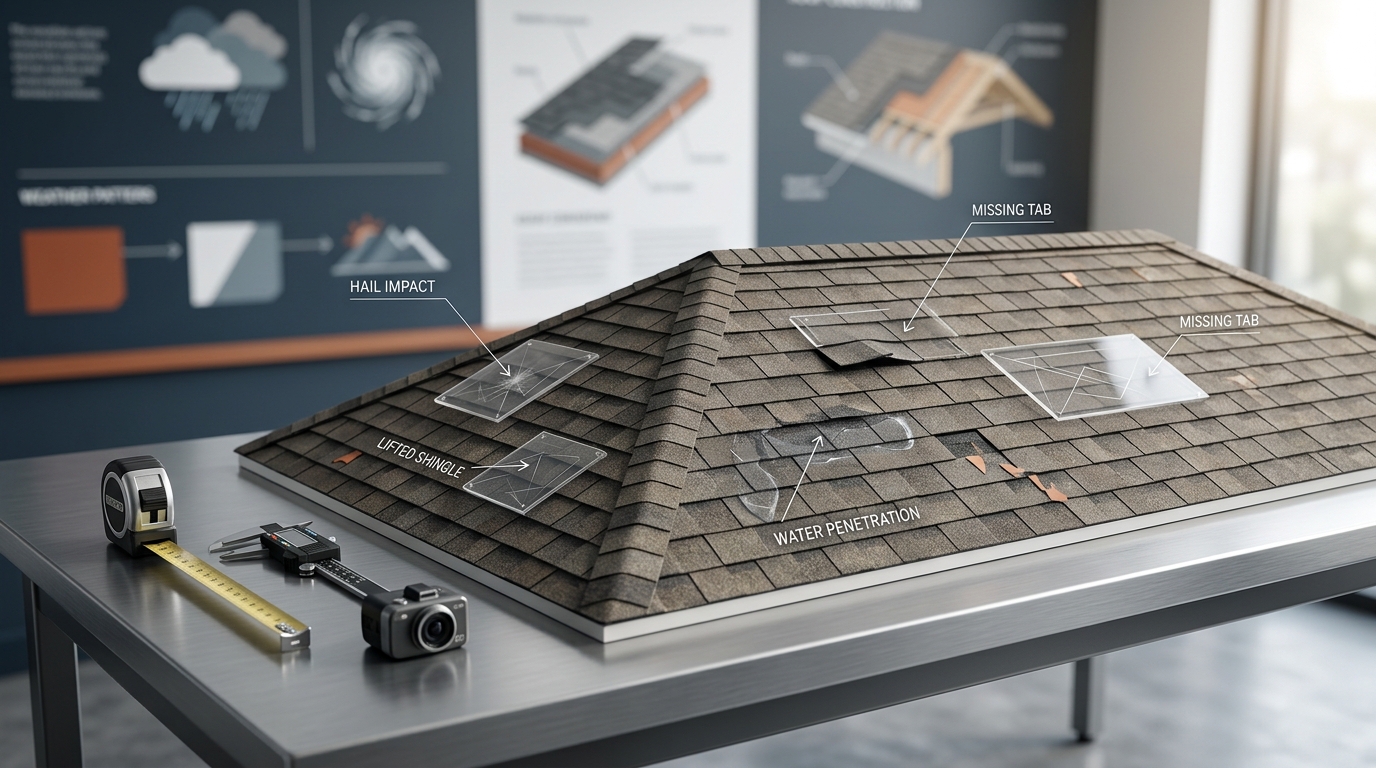
- Missing Shingles: Obvious gaps in the roof pattern or shingles lying in the yard.
- Granule Accumulation: Check your splash blocks and gutter downspouts. A heavy flow of ceramic granules (which look like coarse sand) indicates that the shingles have suffered significant "scouring" from high winds or heavy rain, significantly shortening their lifespan.
- Fascia and Soffit Damage: Look for cracks, loose panels, or water staining on the overhangs of your roof.
- Dented Metal Components: Inspect chimney flashing, roof vents, and valleys for dents that indicate impact from hail or wind-blown debris.
Step 2: Inspecting Gutters and Downspouts
Your gutter system is often the "canary in the coal mine" for roof damage. High hurricane winds can pull gutters away from the roofline, creating gaps where water can seep into the fascia board. If you notice your gutters are sagging or overflowing despite being clear of debris, the storm may have compromised their attachment. This is often the best time to consider professional gutter installation or repair to ensure future storms don't cause foundation issues.
Step 3: The Attic and Interior Check
Often, the most definitive proof of storm damage is found inside the home. After the storm has passed, take a flashlight into your attic and look for:
- Light Penetration: If you can see daylight peeking through the roof boards (sheathing), you have a major problem that requires immediate attention.
- Water Staining: Look for dark spots or streaks on the underside of the roof deck and along the rafters.
- Damp Insulation: Feel the insulation for moisture. Wet insulation loses its R-value and becomes a breeding ground for mold.
- Ceiling Bubbles: Inside your living spaces, look for "bubbles" in the paint or yellow/brown rings on the ceiling, which indicate active leaks.
Comparing Types of Storm Damage
Not all damage looks the same. Depending on the hurricane's characteristics, your roof may suffer from different types of failure. Use the table below to distinguish between common post-storm issues.
| Damage Type | Key Indicators | Urgency Level |
|---|---|---|
| Wind Uplift | Curled shingle edges, broken adhesive seals, missing tabs. | High - Leads to immediate leaks. |
| Impact Damage | Bruised shingles, cracked tiles, or punctures from branches. | Critical - Immediate structural risk. |
| Granule Loss | Bald spots on shingles; sand-like debris in gutters. | Moderate - Accelerates UV decay. |
| Flashing Failure | Pried metal around chimneys or dormers. | High - Common source of major leaks. |
The Role of Debris and Secondary Impacts
In North Carolina, hurricanes often bring down large pine and oak limbs. Even if a limb didn't crash through the roof, the dragging of heavy branches across shingles can strip away the protective asphalt layer. This is known as mechanical damage. Furthermore, if your siding appears cracked or dented after a storm, it is highly likely the roof took a similar beating. We often recommend a full exterior check, including siding inspection, to ensure the entire envelope of the home is secure.
Why Professional Inspection is Mandatory
While a DIY check is a great first step, it cannot replace a professional assessment. Here is why homeowners in cities like Cary, Raleigh, and Durham trust Mj's Roofing and remodeling for post-hurricane inspections:
- Thermal Imaging: Professionals use tools to find moisture behind walls and under roofing layers that aren't visible to the naked eye.
- Insurance Documentation: We provide the detailed reports, photos, and estimates that insurance adjusters require to process claims fairly.
- Safety: We have the harness systems and training to safely inspect steep pitches and damaged structures.
- Expertise in Local Codes: We ensure that any repairs meet the specific building codes for areas we serve throughout North Carolina.
The Hidden Danger: Creeping Leaks
One of the biggest mistakes NC homeowners make is assuming that because they don't see a drip in their living room, their roof is fine. Hurricanes can cause "creeping leaks"—small amounts of water that enter through compromised flashing or nail pops. Over several months, this moisture rots the wooden decking. By the time the leak becomes visible on your ceiling, the repair cost may have tripled due to structural wood rot. Learning how to identify roof storm damage after NC hurricanes involves looking for these subtle shifts in the roof’s appearance, such as slight sagging or unusual moss growth in specific areas after the storm.
Checklist: Post-Hurricane Roof Recovery
- Document the date and time of the storm.
- Take wide-angle photos of the entire property and close-ups of visible damage.
- Contact your insurance company to start a claim.
- Call Mj's Roofing and remodeling for a professional verification.
- Keep receipts for any temporary repairs (like tarping) made to prevent further damage.
FAQs About Hurricane Roof Damage
How long do I have to file a roof damage claim in NC?
While many policies allow up to a year or more, it is best to file as soon as possible. Delaying can lead to the insurance company arguing that the damage was caused by normal wear and tear or neglect rather than the specific hurricane event.
My roof is only 5 years old; can a hurricane still damage it?
Absolutely. Even a brand-new roof can suffer damage if wind speeds exceed its rating or if debris impacts the surface. In fact, newer shingles that haven't fully "sealed" in cooler weather can be more susceptible to wind uplift.
What if I only see one or two missing shingles?
A few missing shingles might seem minor, but they expose the underlayment and decking to direct rain. During a hurricane, rain is often driven horizontally, meaning it can get under shingles and into your home more easily than during a normal thunderstorm.
Can I just repair the damaged area, or do I need a full replacement?
This depends on the extent of the damage and the age of the roof. If more than 25% of the roof is damaged, or if the shingles are nearing the end of their lifespan, most experts (and insurance companies) recommend a full replacement to ensure the system’s integrity.
Conclusion: Protecting Your NC Home
Identifying roof storm damage after a North Carolina hurricane requires a mix of vigilance, safety, and professional expertise. By following a systematic inspection process—from checking your gutters to scanning your attic—you can catch problems before they escalate into costly disasters. Remember, your roof is more than just shingles; it is a complex system designed to keep your family dry and safe.
With over 30 years of experience serving our local communities, Mj's Roofing and remodeling is here to provide the quality craftsmanship you deserve. Whether you need a minor repair or a complete replacement after the next big storm, our team is ready to help. Don't wait for a leak to tell you there's a problem. Contact us today for a professional roof inspection and let us protect your home for the years to come.