
How to Identify Roof Storm Damage in North Carolina: A Complete Guide
Living in the Tar Heel State means enjoying beautiful coastlines, rolling hills, and vibrant cities. However, it also means facing some of the most volatile weather in the country. From the high-velocity winds of Atlantic hurricanes to the sudden, localized hail storms of the Piedmont, North Carolina homes take a beating. At Mj's Roofing and remodeling, we have spent over 30 years protecting local families, and we know that the key to longevity for your home is knowing how to identify roof storm damage in North Carolina before it turns into a catastrophic failure.
Early detection is the difference between a simple repair and a full structural overhaul. In this comprehensive guide, we will leverage our three decades of industry expertise to show you exactly what to look for, the science behind storm impact, and the steps you should take to secure your property after the clouds clear.
Understanding the Unique North Carolina Storm Landscape
North Carolina’s geography makes it a magnet for diverse weather patterns. Our coastal regions face the direct brunt of tropical systems, while our inland areas, such as the Triangle and the Triad, often experience severe convective storms that produce large hail and straight-line winds. According to data from the National Oceanic and Atmospheric Administration (NOAA), North Carolina consistently ranks among the top states for billion-dollar weather disasters.
When searching for residential roofing vulnerabilities, it is important to understand that damage isn't always as obvious as a fallen tree. It is often the subtle compromises in your roofing system’s integrity that lead to the most expensive repairs down the road. Whether you are in a bustling suburb or a quiet rural community, your roof is your first line of defense.
Step-by-Step: How to Identify Roof Storm Damage in North Carolina
We always recommend a professional inspection, but homeowners can perform a preliminary assessment from the safety of the ground. Follow this structured methodology to evaluate your home’s condition.
1. The "Ground-Up" Visual Assessment
You don’t need to climb a ladder to find the first signs of trouble. In fact, we advise against it for safety reasons. Use a pair of binoculars to scan your roofline for:
- Missing Shingles: Look for gaps in the uniform pattern of your roof where the dark underlayment or wood decking might be visible.
- Lifted or Curled Shingles: High winds can break the sealant strips of shingles without blowing them off entirely. If shingles look "puffy" or uneven, the seal is likely compromised.
- Fascia and Soffit Damage: Look for cracks, rot, or sections that have pulled away from the home.
- Chimney Flashing: Ensure the metal stripping around the chimney hasn't been bent or pulled loose by high winds.
- Gutter Alignment: Check if your gutters and gutter guards are sagging or overflowing, which indicates they may have been struck by debris or weighed down by heavy ice/hail.
2. The Attic "Light and Moisture" Test
Your attic tells the story that your exterior might hide. After a major storm, grab a flashlight and head to the highest point of your home.
- Light Peeking Through: If you see pinpoints of daylight through the roof boards (especially around vents or the chimney), you have a direct path for water.
- Water Stains: Look for dark streaks or "rings" on the underside of the roof deck or along the rafters.
- Damp Insulation: Feel the insulation. If it is matted or wet, you have an active leak that requires immediate attention.
- Musty Odors: A sudden damp smell in the attic is a primary indicator of trapped moisture and potential mold growth.
Differentiating Between Wind and Hail Damage
Not all storm damage is created equal. Understanding the difference is crucial for insurance purposes and for determining the urgency of your roofing services.
Identifying Hail Damage
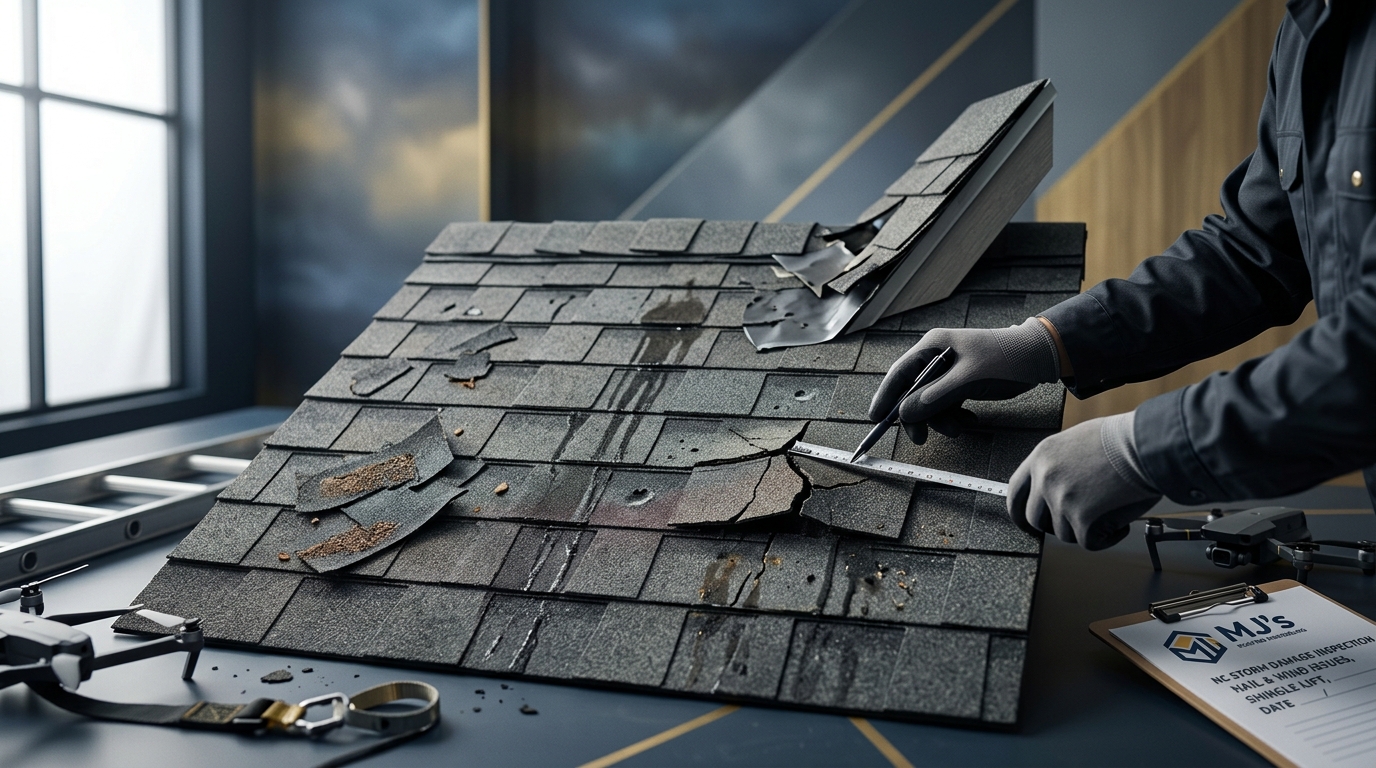
Hail damage is often referred to as "bruising." When a hailstone hits an asphalt shingle, it knocks away the protective granules and weakens the fiberglass mat underneath.
- Granule Loss: Look in your downspouts. If you see piles of granules that look like coarse sand, your shingles have lost their UV protection.
- Circular Indentations: These may be black or dark in color, feeling soft to the touch (like a bruise on an apple).
- Dented Metal: Check your vents, valley flashing, and even your mailbox. If the metal is dented, your shingles almost certainly sustained damage as well.
Identifying Wind Damage
Wind damage in North Carolina often occurs through "uplift." As wind travels over a roof, it creates a vacuum effect that pulls shingles upward.
- Creased Shingles: If a shingle is blown upward and then settles back down, it leaves a horizontal crease where the fiberglass has snapped. This is a "failed" shingle that will eventually leak.
- Sealant Failure: Gently try to lift the edge of a shingle (only if safely accessible). If it lifts easily, the adhesive bond has been broken by wind.
- Debris Impact: In NC, wind often brings tree limbs. Scratches or gouges in the roofing material from flying debris are common entry points for water.
Damage Comparison Table: Quick Reference
| Indicator | Likely Cause | Severity | Action Required |
|---|---|---|---|
| Missing Shingles | High Wind / Hurricane | Critical | Emergency Repair |
| Granules in Gutters | Hail or Heavy Rain | Moderate | Professional Inspection |
| Ceiling Stains | Water Infiltration | Critical | Immediate Investigation |
| Dented Vents | Hail | Low/Moderate | Monitor / Document |
The Financial and Structural Risks of Delayed Action
Many homeowners in North Carolina wait until they see a leak to call a professional. This is a costly mistake. Modern asphalt shingles are designed with multiple layers. The top layer might look "okay" from 30 feet away, but if the integrity is compromised, the sun's UV rays will bake the exposed underlying materials, causing them to crack and fail within months.
Furthermore, insurance companies often have a "statute of limitations" for filing storm-related claims. If you wait two years to report damage from a specific hurricane, your claim may be denied. By documenting and identifying roof storm damage early, you protect your right to a fair settlement. At Mj's Roofing and remodeling, we assist our clients throughout our service areas by providing the detailed documentation adjusters need to process claims accurately.
Commercial vs. Residential Damage Identification
While the focus is often on homes, businesses are equally at risk. Commercial roofing systems, particularly flat roofs (TPO, EPDM, or Modified Bitumen), show damage differently. Instead of missing shingles, you should look for:
- Punctures: Sharp hail or flying debris can pierce the membrane of a flat roof.
- Separated Seams: Wind can pull at the seams where the roof material is welded or glued.
- Standing Water: If a storm shifts the drainage slope of a commercial roof, "ponding" water will occur, leading to rapid deterioration.
Why Trust Mj's Roofing and remodeling?
With over 30 years of hands-on experience in the North Carolina climate, we don't just see a roof; we see a complex system designed to keep your family safe. Our deep roots in the community—from the coast to the mountains—give us a unique perspective on the specific architectural needs of Southern homes. We pride ourselves on quality craftsmanship and an "honesty-first" approach to storm damage assessment.
Frequently Asked Questions
Can I identify hail damage from the ground?
While you can see large dents in metal vents or gutters from the ground, shingle "bruising" usually requires a closer look. If you see signs of impact on your mailbox or car, it is a strong indicator that you should call a professional for a drone or ladder-assisted inspection.
How long after a storm do I have to file an insurance claim?
In North Carolina, most insurance policies require you to file a claim within one year of the date of loss, but some policies vary. It is always best to start the process as soon as you identify potential damage to ensure the best outcome.
Does a few missing shingles mean I need a whole new roof?
Not necessarily. If the roof is relatively new and the surrounding shingles are in good condition, a repair may be sufficient. However, if the storm has caused widespread seal failure or the shingles are older and brittle, a replacement may be the more cost-effective long-term solution.
Conclusion: Take Action Before the Next Storm
Knowing how to identify roof storm damage in North Carolina is an essential skill for any property owner. By performing regular visual checks and understanding the signs of wind and hail impact, you can stay ahead of costly structural issues. Remember, a roof that survived the last storm might be one gust away from failing during the next one.
If you suspect your home has been affected by North Carolina's unpredictable weather, don't leave it to chance. Contact the experts who have been serving this community for over three decades. Mj's Roofing and remodeling is here to provide the peace of mind you deserve.
Ready for a professional assessment? Contact us today or Book Your Inspection Now to ensure your home remains protected for another 30 years and beyond.