
How to Identify Storm Damage on North Carolina Roofs | Expert Guide
Protecting Your NC Home: The Ultimate Guide to Spotting Storm Impact
North Carolina homeowners face a unique set of meteorological challenges. From the humid subtropical climate of the Piedmont to the hurricane-prone coastal plains and the ice-heavy winters of the mountains, our roofs endure significant stress. Knowing how to identify storm damage on North Carolina roofs is not just a matter of home maintenance; it is a critical skill for protecting your largest investment. With over 30 years of experience at Mj's Roofing and remodeling, we have seen firsthand how a small, unnoticed leak can evolve into a catastrophic structural failure if left unaddressed after a storm.
Whether you are dealing with the aftermath of a summer thunderstorm in Raleigh or a tropical depression moving through the eastern part of the state, the window for identifying and claiming damage is often narrower than homeowners realize. This guide provides an authoritative, professional framework for assessing your roof’s health and determining when it is time to call in the experts for residential roofing services.
The North Carolina Storm Profile: Common Threats
Before diving into the inspection process, it is important to understand the three primary types of storm damage prevalent in North Carolina:
- Wind Damage: High-velocity winds, common in both hurricanes and localized microbursts, can lift shingles, break adhesive seals, and even remove entire sections of roofing material.
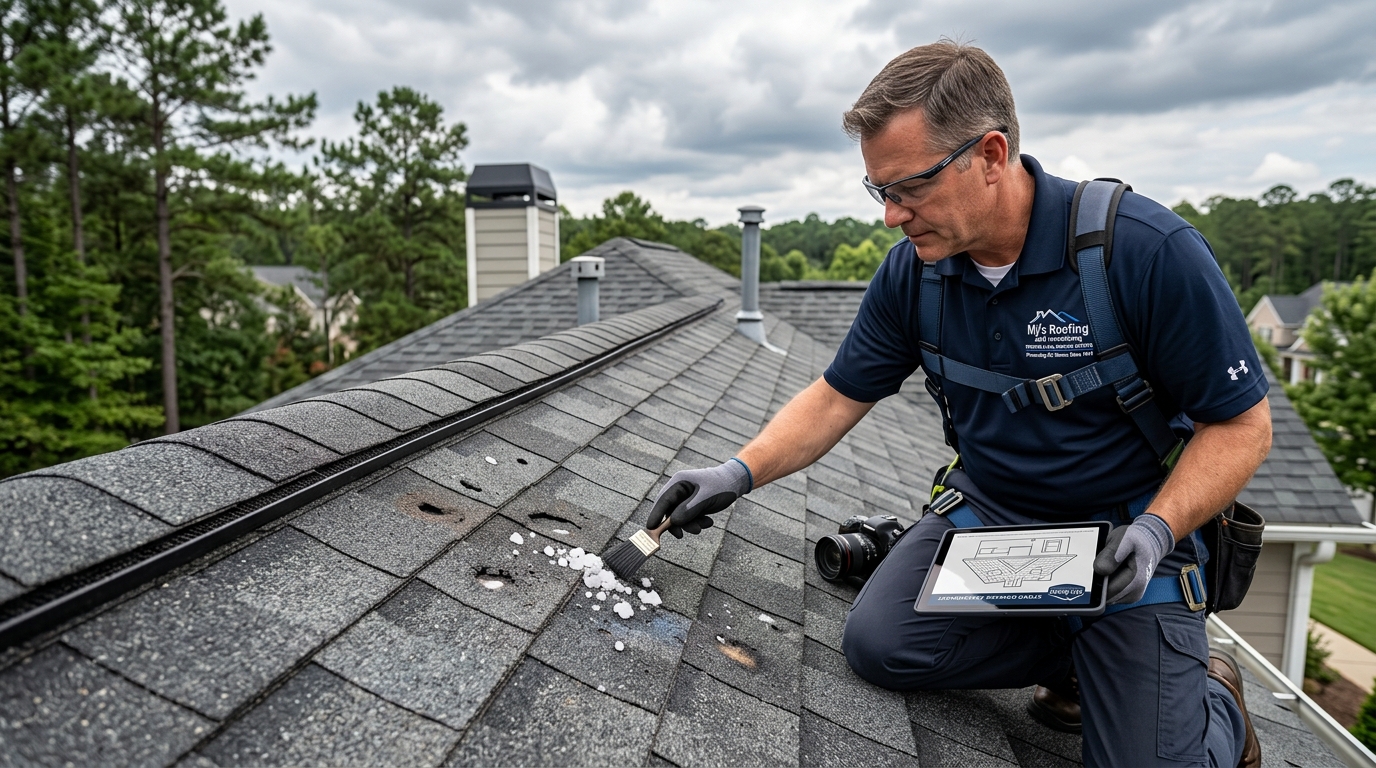
- Hail Damage: While hail storms are often brief, they can be devastating. Large hailstones create impact marks that bruise the shingle mat and knock away protective granules.
- Debris Impact: Falling tree limbs are a major concern in NC’s wooded neighborhoods. Even a medium-sized branch can puncture a roof deck or damage the underlying structure.
A Professional Framework: The 4-Step Storm Assessment Method
At Mj's Roofing and remodeling, we utilize a systematic approach to damage identification. Homeowners can follow this same methodology to safely assess their property from the ground before seeking a professional evaluation.
Step 1: The Perimeter Walk-Through
Begin by walking the entire perimeter of your home. Use a pair of binoculars to get a closer look at the roofline without needing a ladder. Look for shifted shingles, protruding nails, or distorted flashing around chimneys and vents. Pay close attention to the "valleys" of the roof—the areas where two slopes meet—as these are high-traffic zones for water runoff and are prone to leaks.
Step 2: Identifying Hail "Bruising" and Granule Loss
Learning how to identify storm damage on North Carolina roofs caused by hail requires a keen eye for detail. Hail damage often looks like dark spots or "bruises" on the shingles. These spots are where the protective granules have been knocked off, exposing the asphalt substrate to the sun’s UV rays. Check your gutter installation for an accumulation of granules; if your downspouts are discharging what looks like coarse black sand, your shingles have likely suffered significant impact damage.
Step 3: Spotting Wind Uplift and Creased Shingles
Wind damage is often more subtle than a missing shingle. High winds can cause a shingle to lift just enough to break the thermal seal. Once the seal is broken, the shingle may flap in the wind, creating a horizontal crease across the top where the fiberglass mat has fractured. These "creased shingles" are compromised and will no longer shed water effectively. In severe cases, you may see shingles that have been folded back or completely stripped away, exposing the underlayment or wood decking.
Step 4: The Attic Moisture Check
Sometimes the most telling signs of storm damage aren't visible from the outside. Head into your attic with a high-powered flashlight. Look for:
- Water stains on the underside of the roof decking.
- Damp or matted insulation.
- Light peeking through the roof (other than designed vents).
- A musty smell or visible mold growth on rafters.
Comparing Storm Damage Types: At-A-Glance Reference
| Damage Type | Visual Indicators | Potential Long-Term Risk | Urgency Level |
|---|---|---|---|
| Hail | Pitting, granule loss, "bruised" spots. | Accelerated shingle aging, UV degradation. | Moderate (Monitor) |
| Wind | Creased shingles, missing tabs, lifted edges. | Leaks during driving rain, mold growth. | High (Immediate) |
| Debris | Cracked shingles, punctured decking. | Structural rot, immediate interior water damage. | Critical (Emergency) |
| Flashing | Bent or pulled-away metal around vents. | Direct water entry into the home's framing. | High (Immediate) |
The Role of Secondary Elements: Gutters, Siding, and Trim
When investigating how to identify storm damage on North Carolina roofs, do not overlook the peripheral components of your home's exterior. Damage to these areas often serves as a "proxy" for roof damage in the eyes of insurance adjusters. For instance, if your siding shows cracks or dents from hail, it is almost certain that the roof has sustained similar or worse impact. Dented gutter troughs and damaged downspouts are also clear indicators of a high-energy storm event that warrants a professional roof inspection.
Navigating the Insurance Claim Process in North Carolina
Identifying the damage is only half the battle. Because North Carolina is a high-risk state for storm activity, insurance companies have specific requirements for filing claims. Most policies require that you report damage within a certain timeframe (often one year), but the sooner you act, the better.
When you work with a trusted local expert like Mj's Roofing and remodeling, we provide the detailed documentation required by adjusters. This includes high-resolution photos, roof diagrams, and a comprehensive breakdown of the necessary repairs or replacement needs. If you are unsure if your damage meets your deductible, it is always best to have a professional assessment before filing a claim to avoid unnecessary "zero-pay" claims on your insurance record.
Why Local Expertise Matters for NC Homeowners
Not all roofing contractors are created equal. "Storm chasers" often flood North Carolina after a major hurricane, offering quick fixes that don't stand up to our state's specific building codes or climate demands. Mj's Roofing and remodeling has served this community for over 30 years. We understand the local wind-load requirements and the specific manufacturer warranties that work best for our humidity levels. Whether you are looking for a Clayton roofing contractor or help in any of our other service areas, we bring decades of localized knowledge to every project.
Frequently Asked Questions About Storm Damage
How soon after a storm should I inspect my roof?
You should perform a ground-level visual inspection as soon as it is safe to go outside. However, professional inspections should be scheduled within 24 to 48 hours if you suspect significant impact or see missing materials, as interior damage can begin almost immediately during subsequent rain showers.
Can I have roof damage even if I don’t see a leak?
Yes. Many types of storm damage, particularly hail bruising and wind uplift, do not cause immediate leaks. These issues compromise the roof's integrity, leading to slow-acting wood rot and mold that may not be apparent inside the home for months or even years.
Will my insurance premiums go up if I file a storm damage claim?
In North Carolina, insurance companies generally cannot raise your individual rates solely because you filed a claim for "Acts of God" like weather events. However, regional rates may fluctuate based on the total number of claims in an area after a major catastrophe.
What is the difference between functional and cosmetic damage?
Functional damage affects the roof’s ability to shed water and protect the structure (e.g., a hole or a broken seal). Cosmetic damage affects the appearance but not necessarily the performance (e.g., slight discoloration). Most insurance policies cover functional damage, though some modern policies have exclusions for purely cosmetic hail damage to metal roofs.
Conclusion: Don't Wait for the Drip
Understanding how to identify storm damage on North Carolina roofs is your first line of defense against long-term property depreciation. While a DIY check from the ground is a great starting point, nothing replaces the precision of a professional inspection. The complexities of asphalt shingle technology and the nuances of insurance adjusting require an expert hand.
If your home has recently weathered a significant storm, don't leave your safety to chance. Contact the team that North Carolina has trusted for three decades. Contact Mj's Roofing and remodeling today for a comprehensive inspection and let us help you protect what matters most.