
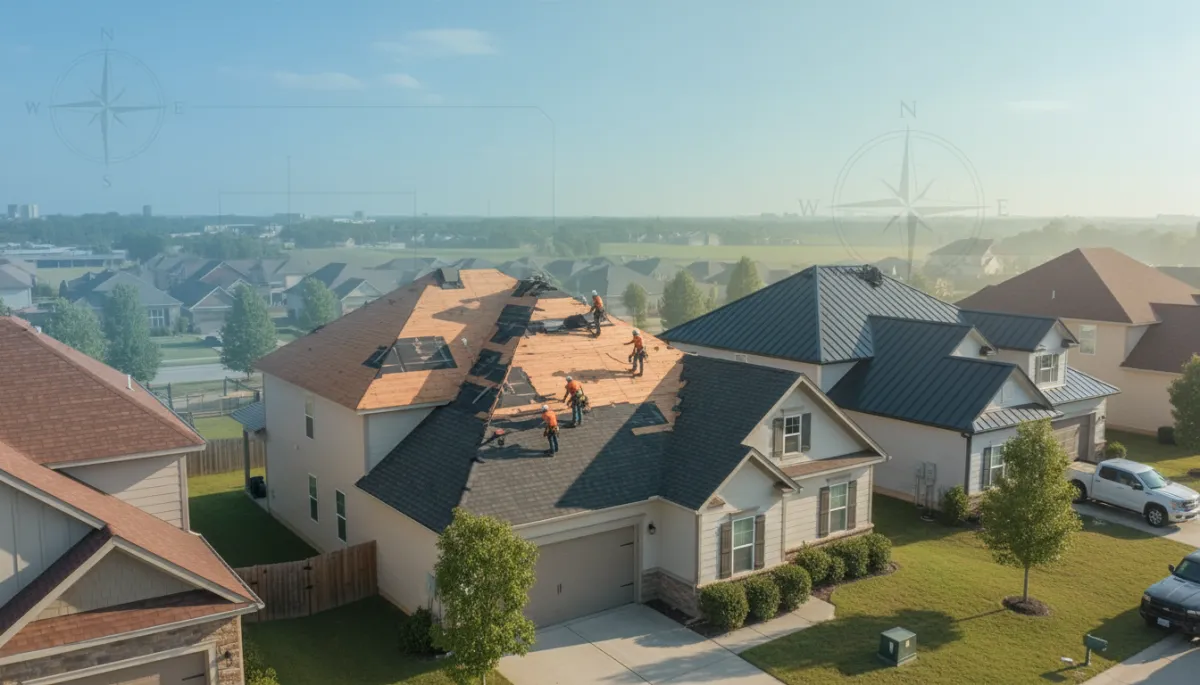
2026 Raleigh-Durham Roof Replacement Cost Guide
Roofing, Home Improvement, Raleigh-Durham
Raleigh-Durham Roof Replacement Cost Guide (2026)
A practical, numbers-first breakdown of 2026 roof replacement costs for Raleigh and Durham homeowners—what’s typical, what drives price, and how to budget with fewer surprises.
Why Raleigh-Durham Roof Costs Don’t Match the National “Average”
If you Google “average roof replacement cost,” you’ll see national ranges that sound comforting—until a local Raleigh or Durham quote lands in your inbox and comes in higher (or sometimes much higher). That gap isn’t your imagination. The Triangle has its own cost profile driven by three big factors: storms, permits, and the local labor market.
First, storm exposure. Our area sees severe thunderstorms, hail, and the occasional tropical system. That means more storm-damaged roofs, more emergency work, and more demand for qualified crews. Higher demand, especially after big events, pushes labor pricing up and keeps it there. Many replacements here also involve insurance claims, which usually include full tear-off and code upgrades, increasing the scope compared to a simple “budget” overlay you might see in other regions.
Second, permit and inspection requirements. Wake and Durham counties both require permits for full replacements. Fees are modest—often in the $100–$300 range—but inspections can require additional work: bringing ventilation, flashing, or decking up to current code. Those code-driven line items rarely show up in national averages but are very real on Triangle proposals, especially in older neighborhoods around Raleigh, Cary, and Durham’s urban core.
Third, the local labor market. Raleigh’s construction labor tends to run slightly above national baselines thanks to steady growth and a strong housing market. Durham’s labor costs are a bit lower on paper, but data still shows typical replacements in the $9,000–$12,000 range for many asphalt roofs, with complex or high-end projects reaching $27,000–$36,000. In Raleigh, multiple sources cluster a 2,000 sq ft architectural shingle roof around $9,000–$15,000 for 2026.
Average Roof Replacement Cost Ranges in 2026 (by Home Size)
To keep things concrete, here’s a homeowner-friendly view for typical Raleigh-Durham asphalt shingle roofs in 2026. These ranges assume full tear-off, standard architectural shingles, and no major structural surprises. Real quotes will vary, but these ballparks line up with recent local data from Raleigh and Durham cost guides.
Home Size (Approx. Roof Area) Low Estimate Mid-Range High Estimate ~1,500 sq ft home (simple roof) $7,000 $9,500 $12,000 ~2,000 sq ft home (common in Raleigh) $8,500 $11,500 $15,000 ~2,500 sq ft home (larger footprint) $10,000 $14,000 $19,000 3,000+ sq ft or complex roof $13,000 $18,000 $25,000+
These numbers sit comfortably inside the ranges reported by recent Raleigh and Durham cost calculators, which show most asphalt replacements landing between roughly $8,000 and $20,000, with outliers on both ends for very small or very premium projects.
Cost by Roofing Material (Price per Square)
Roofers price work in “squares”—each square is 100 sq ft of roof area. Below are typical installed price ranges per square for 2026 in the Raleigh-Durham market, including materials and labor:
Asphalt 3-tab shingles: ~$350–$550 per square (about $3.50–$5.50/sq ft). Entry-level, shorter life, often used on rentals or tight budgets.
Architectural shingles: ~$450–$700 per square ($4.50–$7.00/sq ft). The most common choice for Raleigh-Durham homeowners, with better curb appeal and wind ratings than 3-tab.
Metal roofing (standing seam/corrugated): ~$1,300–$2,000 per square ($13–$20/sq ft). Higher upfront, but excellent longevity and energy efficiency when installed correctly.
Synthetic slate: ~$1,500–$2,800 per square in many NC installs. Lighter than real slate, with a premium look and long warranties, often used on upscale homes or historic-style builds.
Tile (clay or concrete): ~$2,000–$3,500 per square. Heavier, more complex to install, and typically reserved for custom homes where structure and HOA guidelines support it.
For a 20-square (2,000 sq ft) roof, that means a realistic spread from roughly $7,000–$12,000 for 3-tab, $9,000–$16,000 for architectural shingles, and $14,000–$28,000+ for metal or tile, depending on profile and complexity.
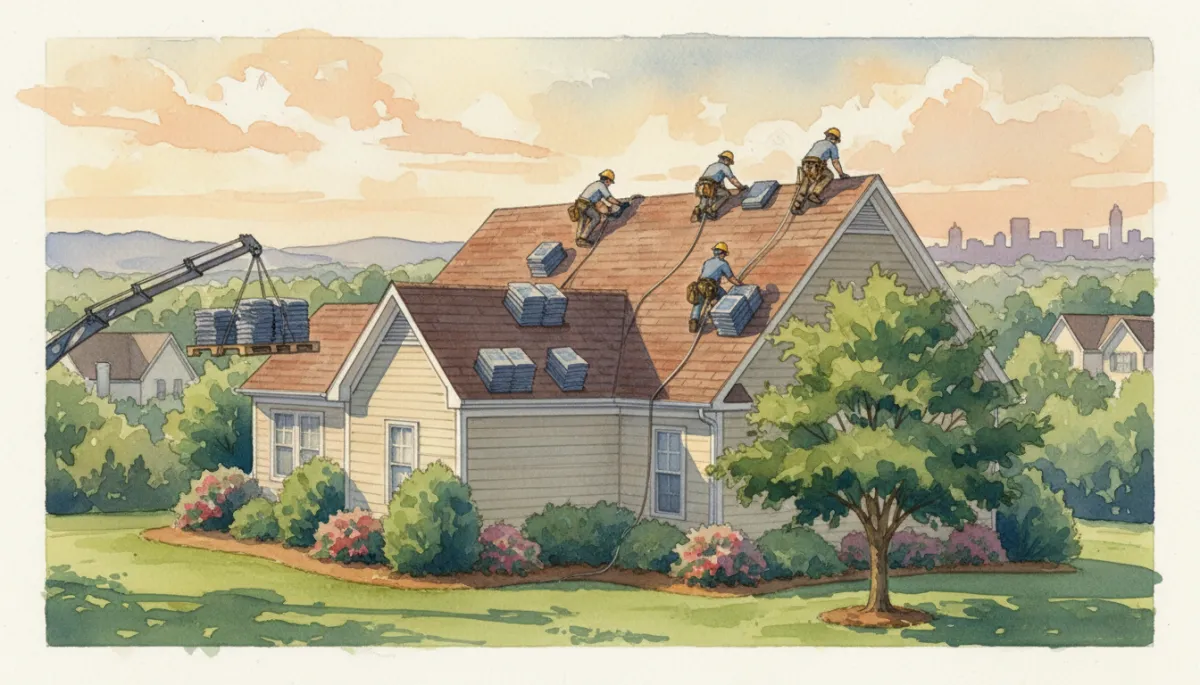
Architectural shingles balance cost, durability, and curb appeal for most Triangle homes.
What Really Drives the Price of Your Roof
Roof pitch: Steeper roofs are slower and riskier to work on, so labor hours (and safety setup) increase. A simple low-slope ranch in North Raleigh may price thousands below a steep, multi-story roof in Durham’s older neighborhoods, even at the same square footage.
Existing layers to tear off: Many Triangle homes have one existing layer; some older ones have two. Each layer adds demo, disposal, and time. Code and manufacturer warranties usually require a full tear-off, not a “roof-over,” for a proper replacement in 2026.
Decking repairs: Soft or rotten plywood or OSB has to be replaced. It’s often billed per sheet, so a roof with widespread decking damage can jump by $1,000–$3,000+ beyond the base estimate, especially on older homes or those with long-term leaks around chimneys and valleys.
Skylights, chimneys, and penetrations: Each skylight, pipe boot, chimney, or vent stack adds flashing work and leak risk. Re-flashing or replacing skylights correctly takes time and skill, which shows up in the labor portion of your quote.
Permit fees in Wake and Durham counties: Permit costs themselves—often around $100–$300—are a small slice of the budget, but inspections can trigger required upgrades. For example, adding more intake and exhaust ventilation or correcting non-code flashing details can add line items you won’t see in a bare-bones national estimate.
Hidden Costs Homeowners Often Miss
When I read roofing proposals the way I’d read a code diff, the “gotchas” are almost always in the details. Here are the common ones to watch for in Raleigh-Durham quotes:
Underlayment upgrades: Many base bids use standard felt. An upgrade to synthetic underlayment costs more upfront but adds better moisture resistance and walkability—especially important in our humid climate and during sudden summer storms mid-project.
Drip edge: Proper metal drip edge at eaves and rakes is required by modern codes. Some low bids quietly omit it or treat it as an add-on. Make sure it’s clearly listed and included, not “if needed” in fine print.
Ridge vent and ventilation: Upgrading from box vents to continuous ridge vent improves attic airflow and can help with shingle life and HVAC efficiency. It’s a modest cost increase that pays off, but it needs to be explicitly included in your scope of work.
Ice-and-water shield around penetrations: While we don’t live in Minnesota, self-adhering ice-and-water membrane in valleys and around chimneys, walls, and skylights is cheap insurance against wind-driven rain. Some contractors only include it in valleys by default; others use it at all critical details. That difference matters over 20–30 years of storms.
Insurance vs. Out-of-Pocket in North Carolina
In the Triangle, many roof replacements are triggered by storm damage—hail impacts, wind creasing shingles, or tree limbs. In those cases, you’ll often go through your homeowner’s insurance instead of paying everything out of pocket. The high-level flow looks like this:
A storm hits; you notice missing shingles, leaks, or neighbors getting inspections.
You schedule a local roofer to document damage with photos and a written report.
You file a claim; an adjuster inspects and writes their own estimate.
Your contractor and adjuster reconcile scope and pricing; supplements get added for code-required items like drip edge or ridge vent.
Two terms matter a lot in North Carolina policies:
ACV (Actual Cash Value): The insurer pays the depreciated value of your old roof. You’re responsible for the rest plus your deductible. On an older roof, this can leave a large gap you must cover out-of-pocket or with financing.
RCV (Replacement Cost Value): The insurer pays the full cost (minus deductible) to replace with like kind and quality, often in two checks: one upfront (ACV) and one after the work is complete (recoverable depreciation).
Before you sign a contract, confirm whether your policy is ACV or RCV, and have your contractor align their scope with what the carrier is actually approving so you’re not surprised at closing.
Financing Options: GreenSky, Acorn, and More
Even with solid insurance coverage, you’ll still owe at least your deductible—and if you’re paying out of pocket, a roof is a significant line item. Many Raleigh-Durham homeowners spread the cost out with financing. A typical pattern we see:
GreenSky: Often a good fit if your credit score is around 650+. You’ll see options like low monthly payments or short-term promotional interest plans for qualified buyers.
Acorn Finance: Frequently used when scores are below 650. They connect you with multiple lenders so you can compare offers and pick what’s workable for your budget.
For more details on current programs and sample monthly payments, check our financing page after you have a ballpark project total in mind.
How to Choose a Raleigh-Durham Roofing Contractor
Picking a roofer is a lot like picking a software vendor: the cheapest bid that “kind of” meets the spec usually costs more later. For a full replacement in the Triangle, look for:
Proper licensing: For larger projects or when structural work is involved, confirm they hold the appropriate North Carolina General Contractor (GC) license or required state roofing credentials, not just a business card and a truck.
Local references and reviews: Ask for addresses of recent jobs in Raleigh, Durham, Cary, or Apex. A reputable roofer should be able to point you to multiple roofs they’ve installed within the last 2–3 years that you can actually drive by and see.
Manufacturer certifications: Look for badges from major shingle manufacturers (GAF, CertainTeed, Owens Corning, etc.). Those certifications often unlock better workmanship warranties and signal that the installer follows the spec that keeps your warranty valid.
You can also review our residential roofing services and Raleigh service area pages to see how we approach full replacements, inspections, and warranty support locally.
Raleigh-Durham Roof Replacement FAQ (2026)
1. What’s the best time of year to replace my roof in the Triangle?
Spring and fall are ideal—mild temperatures and fewer storm delays. Good crews work year-round, though, and winter replacements are common when weather cooperates.
2. How long does a typical roof replacement take?
Most 1,500–2,500 sq ft asphalt shingle roofs are completed in one to two days once the crew starts, assuming normal weather and no major decking surprises.
3. What warranties should I expect?
You’ll usually get a manufacturer material warranty (often 25–50 years on architectural shingles) plus a separate workmanship warranty from the contractor, commonly 5–10 years or more for certified installers.
4. Do I have to replace gutters at the same time?
Not always. Many gutters can stay if they’re in good shape, but some homeowners choose to upgrade them after a new roof for looks and better water management. Your roofer should protect existing gutters during tear-off.
5. Will my landscaping and driveway be protected?
They should be. Ask how the crew handles tarps, magnet sweeps for nails, and dumpster placement. A careful cleanup plan is part of a professional replacement, not an optional extra.
Get a Free 1-Minute Online Estimate
If you’d like a Triangle-specific number instead of another vague national average, you can get a quick ballpark in about a minute. Use our easy online tool at easyquotes.co for a free, no-obligation estimate based on your home and material preferences, then we can fine-tune it after an on-site inspection.
Prefer to talk it through? Call us at (984) 253-1100, or reach out via our contact page. We’ll walk you through options, timelines, and financing so you can replace your Raleigh-Durham roof with clear expectations and zero surprises.