
Signs of Roof Storm Damage in North Carolina: Expert Guide
Protecting Your North Carolina Home After Severe Weather
North Carolina homeowners are no strangers to the volatile weather patterns that sweep across the state. From the humid subtropical climate of the Piedmont to the coastal hurricane threats and the sudden hail storms in the western regions, your roof is your first line of defense. However, identifying the signs of roof storm damage in North Carolina isn't always as simple as spotting a fallen tree. Much of the damage is subtle, accumulating over time until it manifests as a costly interior leak.
At Mj's Roofing and remodeling, we have spent over 30 years protecting local homes. We understand that after a major weather event, the stress of potential repairs can be overwhelming. This guide is designed to provide you with the professional insights needed to identify damage early, navigate the insurance process, and ensure your home remains a safe haven for your family.
The NC Climate: Why Our Roofs Face Unique Stressors
In North Carolina, our roofing systems face a gauntlet of environmental stressors. Unlike states with more consistent climates, NC roofs must handle extreme heat, high humidity, salt air (in coastal areas), and rapid temperature drops that lead to thermal shock. When a storm hits, these existing stressors can exacerbate the damage.
According to the National Oceanic and Atmospheric Administration (NOAA), North Carolina is one of the top states for billion-dollar weather and climate disasters. Whether it is a late-summer hurricane or a spring supercell, the impact on your asphalt shingles, metal roofing, or cedar shakes can be profound. Understanding the specific signs of roof storm damage in North Carolina is the first step in a proactive maintenance strategy.
Identifying Wind Damage: Beyond the Obvious
High winds are perhaps the most common cause of roof trauma in our region. While you might notice a shingle lying in your yard, the most dangerous wind damage often happens where you can’t see it from the ground.
The "Lift and Peel" Effect
Wind doesn't always blow shingles off entirely. Often, it creates a suction effect that lifts the shingle just enough to break the sealant bond. Once this bond is broken, the shingle is no longer watertight. Even if it settles back into place, the next rainstorm will drive water underneath, leading to wood rot in the decking.
Creased Shingles
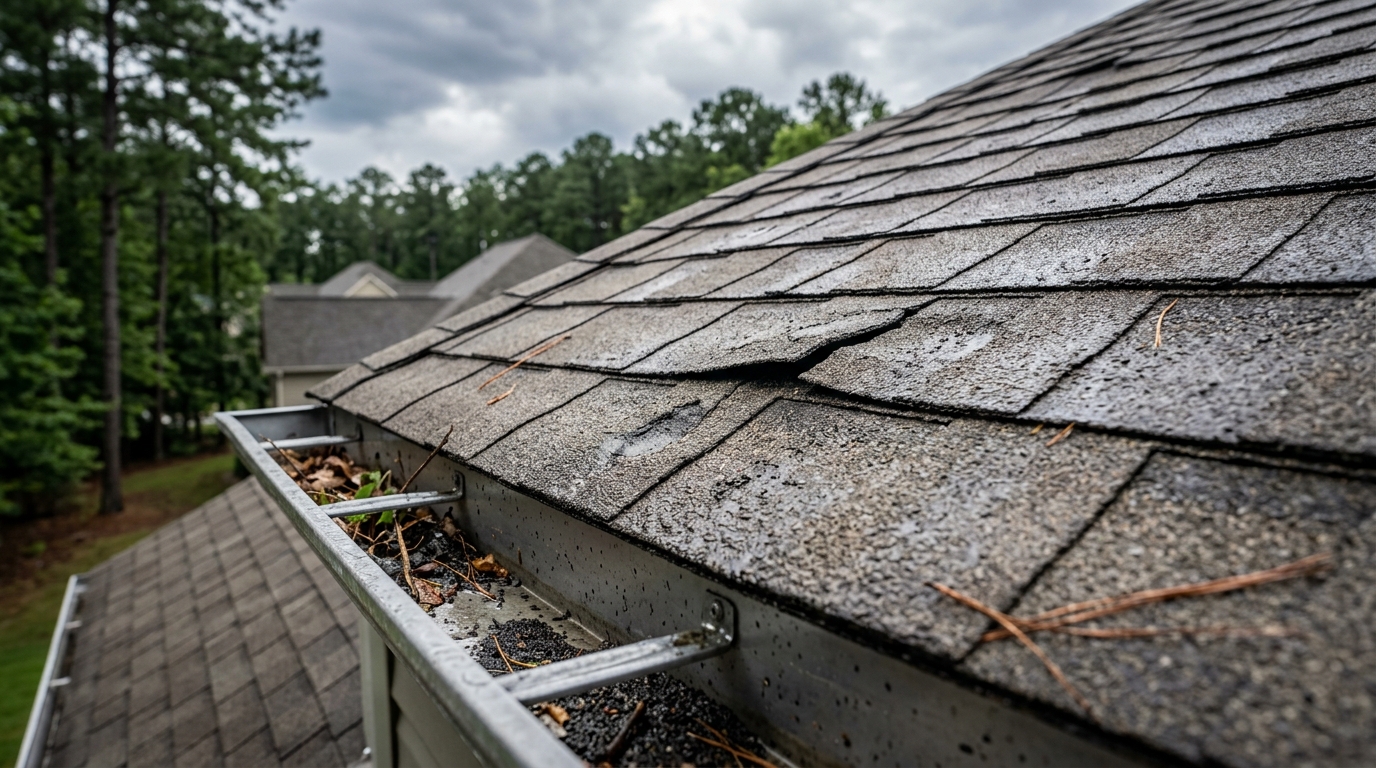
Professional inspectors look for horizontal creases across the shingle. This occurs when the wind folds the shingle back. The fiberglass matting inside the shingle snaps, creating a permanent weakness. If you see dark lines across the top of your shingles, this is a definitive sign of wind-related failure.
Hail Damage: The Silent Killer of Asphalt Shingles
Hail damage is often referred to as a "silent killer" because it rarely causes an immediate leak. Instead, hail impacts knock the protective mineral granules off the shingle. These granules protect the asphalt from UV radiation. Without them, the sun will "cook" the shingle, leading to cracking and leaking within 6 to 24 months.
How to Spot Hail Impact
- Bruising: Feel the shingle for soft spots that feel like a bruise on an apple.
- Circular Granule Loss: Look for dark, circular pits where the asphalt is exposed.
- Splatter Marks: On lead pipe boots or metal vents, hail will leave "clean" spots where it knocked off oxidation.
| Hail Size | Potential Roof Impact | Required Action |
|---|---|---|
| 0.75" (Penny) | Granule loss, damage to older shingles | Professional inspection recommended |
| 1.00" (Quarter) | Functional damage to most asphalt shingles | Immediate inspection; potential claim |
| 1.75"+ (Golf Ball) | Likely penetration; damage to siding and gutters | Emergency tarping and full replacement likely |
Secondary Damage: Gutters, Siding, and Trim
When assessing for signs of roof storm damage in North Carolina, don't forget to look down. Your roof functions as a complete system, including your gutters and gutter guards. Heavy rain and hail often clog gutters with granules or dent them so severely that they no longer pitch correctly.
If your gutters are pulling away from the fascia board or if you see an abundance of shingle granules in the downspouts, your roof has likely suffered significant impact. Similarly, check your siding for cracks or holes, as wind-blown debris often strikes the walls before the roof.
The MJ's 5-Point Storm Recovery Framework
If a storm has recently passed through your area, we recommend following this methodology to protect your investment:
- Ground-Level Visual Check: Walk around your home with binoculars. Look for missing shingles, bent flashing, or sagging gutters.
- Attic Inspection: Go into your attic with a flashlight during the day. Look for light peeking through the boards or water stains on the rafters.
- Document Everything: Take photos of any debris in the yard, dented mailboxes, or damaged screens. This helps build a case for insurance.
- Verify Contractor Credentials: Ensure any company you call has deep local roots. Mj's Roofing and remodeling has been a fixture in North Carolina for over three decades, ensuring we'll be here long after the storm chasers leave.
- Schedule a Professional Assessment: Some damage is only visible via a roof-top inspection. For comprehensive residential roofing services, professional eyes are a necessity.
The Dangers of Delayed Repairs
Wait-and-see is a dangerous strategy when it comes to roofing. In the North Carolina humidity, a small leak can turn into a major mold infestation in a matter of weeks. Furthermore, insurance companies often have a "statute of limitations" on when you can file a claim after a storm event. If you wait too long, you may be stuck paying for a full replacement out of pocket.
Pros and Cons of Immediate Action
Pros:
- Prevents secondary water damage to ceilings and insulation.
- Increases the likelihood of insurance coverage.
- Maintains the structural integrity of your home's decking.
Cons:
- Requires time to coordinate with inspectors and adjusters.
- Potential for temporary noise and disruption during repairs.
Why Local Expertise Matters
Since our founding, Mj's Roofing and remodeling has focused on quality craftsmanship. We don't just patch holes; we restore the integrity of your home. You can learn more about our history and commitment to NC. Our team understands local building codes and the specific requirements for various North Carolina municipalities, ensuring your repair or replacement is fully compliant and built to last.
Frequently Asked Questions
How long after a storm do I have to file a roof claim in NC?
While it varies by insurance provider, most policies require you to file a claim within one year of the date of loss. However, we recommend filing as soon as damage is confirmed to prevent further deterioration of the property.
Can a roof be damaged even if I don't see leaks inside?
Absolutely. Hail and wind damage often compromise the outer layer of the roof (shingles or metal) while the underlayment remains temporarily intact. It may take several months of rain and UV exposure for the water to finally penetrate into your living space.
Does Mj's Roofing and remodeling work with insurance companies?
Yes. We provide detailed damage assessments and documentation that you can provide to your insurance adjuster to help streamline the claims process and ensure you receive the coverage you are entitled to under your policy.
What are the signs of storm damage on a commercial roof?
For commercial roofing, signs include ponding water, punctures in the TPO or EPDM membrane from flying debris, and loosened flashing around HVAC units. Commercial roofs are particularly susceptible to wind uplift at the corners.
Conclusion: Don't Leave Your Roof to Chance
The signs of roof storm damage in North Carolina are not always obvious, but they are always serious. Protecting your home requires a combination of homeowner vigilance and professional expertise. With over 30 years of experience in the North Carolina market, Mj's Roofing and remodeling is prepared to help you navigate the aftermath of any storm.
If you suspect your home has been impacted by recent weather, do not wait for a leak to appear. Contact us today for a professional inspection. Let our family protect yours with the quality craftsmanship and exceptional service that has defined our business for three decades.