
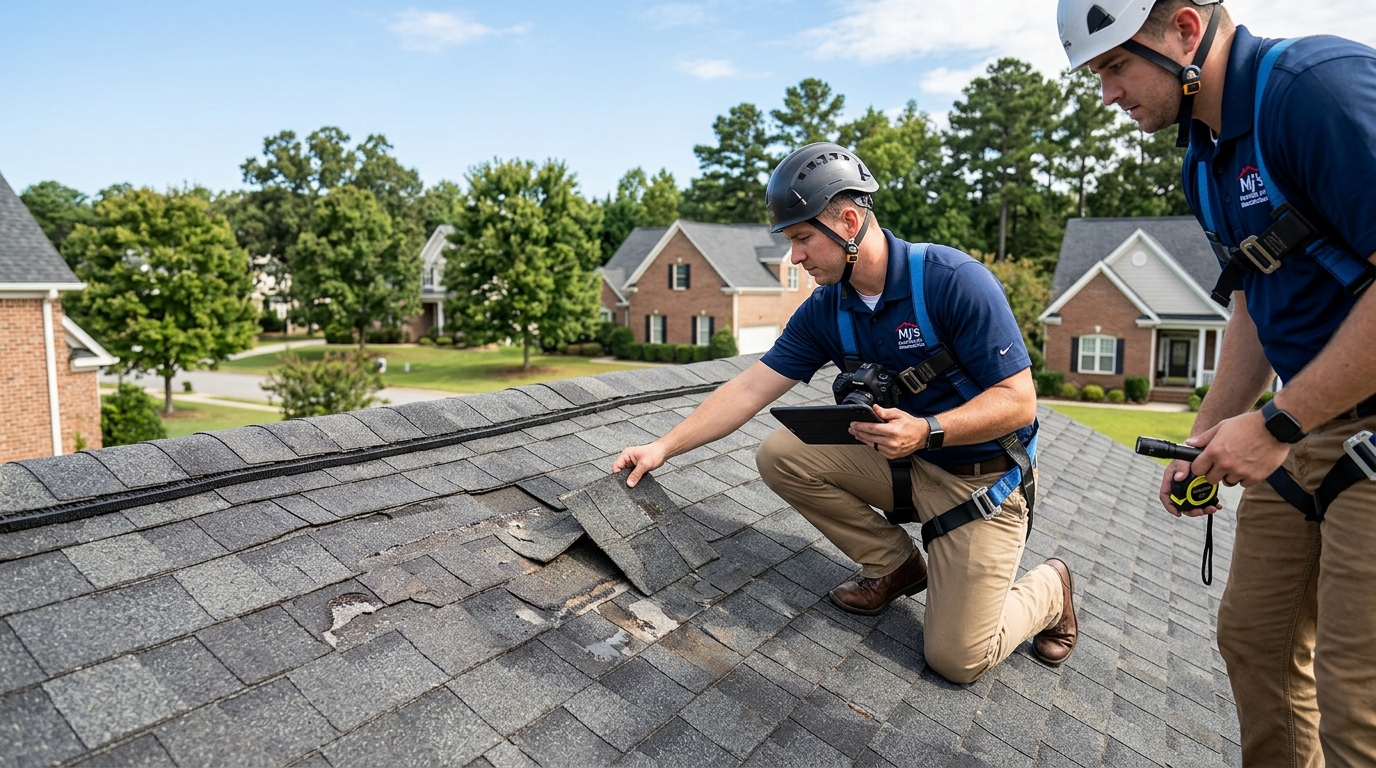
10 Critical Signs of Storm Damage on a North Carolina Roof
Recognizing the Subtle and Obvious Signs of Storm Damage on a North Carolina Roof
Living in North Carolina offers a beautiful landscape, from the coastal plains to the Piedmont and the mountains. However, this geography also places our homes directly in the path of diverse and often destructive weather patterns. Whether it is a late-summer hurricane tracking up the coast, a localized spring hailstorm, or the high-velocity winds of a winter Nor’easter, your roof is the first line of defense. At Mj's Roofing and remodeling, we have spent over 30 years identifying the specific signs of storm damage on a North Carolina roof that often go unnoticed by the untrained eye.
Post-storm inspections are not just about finding leaks; they are about preserving the structural integrity of your home. Identifying damage early can mean the difference between a minor residential roofing repair and a total system failure. In this comprehensive guide, we will draw on three decades of local expertise to show you exactly what to look for, how to document it, and when to call in the professionals.
The North Carolina Weather Factor: Why Our Roofs Face Unique Challenges
North Carolina ranks consistently among the top states for billion-dollar weather disasters. Our unique climate presents three primary threats to roofing materials: high-velocity wind, impact from hail, and excessive moisture. Unlike arid climates, NC’s high humidity means that once a storm compromises the shingle layer, fungal growth and wood rot can set in with alarming speed.
When assessing signs of storm damage on a North Carolina roof, it is vital to understand that damage is cumulative. A single hailstorm might not cause a leak today, but it can strip away the protective granules that shield your shingles from the intense Southern sun, leading to premature aging and cracking within months.
1. Missing, Lifted, or Creased Shingles
High winds are perhaps the most frequent culprit of roof damage in areas like the Piedmont and the coast. When wind speeds exceed 50-60 mph, they can create an "uplift" effect. This force pulls shingles upward, breaking the thermal seal that bonds them to the layer below.
How to Spot Wind Damage
- Missing Shingles: The most obvious sign, leaving the underlayment or even the roof deck exposed to the elements.
- Creased Shingles: If a shingle was lifted by the wind and then flipped back down, it may look intact from the ground. However, a horizontal crease near the top of the shingle indicates the fiberglass mat has been fractured. This is a functional failure.
- Curling at the Edges: Wind can catch the corners of shingles that have already begun to age, further compromising the perimeter of your roof.
2. Hail Impact Marks and Granule Loss
Hail damage is often the most deceptive type of storm damage. It rarely causes immediate leaks but significantly shortens the lifespan of the roof. In North Carolina, hailstorms can range from pea-sized to golf-ball-sized, each leaving a distinct fingerprint on your shingles.
Identifying Hail Hits
On asphalt shingles, hail damage looks like dark spots where the protective granules have been knocked away, exposing the black bitumen (asphalt) underneath. These spots may feel soft to the touch, similar to a bruise on an apple. Over time, UV rays will bake these exposed spots, making them brittle and prone to cracking.
One of the best places to check for hail damage isn't actually on the shingles themselves, but in your gutters. If you see an excessive amount of granules—looking like coarse sand—accumulating in your gutter system, it is a primary indicator that your shingles have suffered significant impact.
3. Damaged Roof Flashing and Penetrations
Flashing is the metal material installed around chimneys, dormers, and vent pipes to redirect water away from these vulnerable joints. During a storm, flying debris or high-pressure winds can bend or loosen these metal sheets. If the sealant around these penetrations is cracked or missing, water will find its way into your attic during the next rain cycle.
4. Comparison Table: Wind vs. Hail Damage
| Feature | Wind Damage | Hail Damage |
|---|---|---|
| Primary Sign | Missing or creased shingles | Dark circular pits or bruises |
| Pattern | Random patches or roof edges | Uniform across the roof face |
| Secondary Indicators | Damaged soffits/fascia | Dents in gutters and vents |
| Immediate Risk | High (Exposed deck) | Moderate (Accelerated aging) |
5. Dented Gutters and Downspouts
Your gutters act as a "telltale" for the rest of the roof. Because they are made of relatively soft aluminum, they record the intensity of a storm with precision. If your gutters have small, rounded dings, it is almost certain that your shingles have similar, though less visible, impact damage. We recommend checking your gutters regularly across all areas we serve in North Carolina, as this is often the documentation insurance adjusters look for first.
6. Water Spots on Ceilings and Walls
Sometimes the signs of storm damage on a North Carolina roof are found inside the house before they are noticed outside. After a major rain event, inspect your top-floor ceilings and the corners where walls meet. Discoloration, bubbling paint, or active dripping are signs that the roof’s water-shedding capability has been compromised.
Keep in mind that water is opportunistic; it rarely travels in a straight line. A leak in your living room ceiling might actually be caused by a damaged shingle or flashing 15 feet away on the roof, as water travels down the rafters before dripping onto the drywall.
7. Damaged Fascia and Soffits
The fascia (the board where gutters are attached) and soffit (the underside of the eaves) are critical for roof ventilation and protection. High winds can rip fascia boards away or force water upward into the soffit vents. If you see rotting wood, peeling paint, or detached boards along your roofline, your roof's perimeter defense is failing.
8. Fallen Debris and Tree Limb Scrapes
North Carolina is known for its lush tree canopy, but during a storm, those trees become a liability. Even if a large limb doesn't crash through the roof, smaller branches can scrape across the surface. These "scuff marks" remove granules and can tear shingles. If you see branches on your roof after a storm, there is a high probability of surface-level damage that needs an expert assessment.
9. Clogged or Detached Downspouts
A storm can shake loose debris from trees or granules from shingles, causing immediate clogs in your downspouts. When water cannot flow away from the home, it backs up under the shingles at the eave line—a process known as "wicking." This can lead to rapid rot of the roof deck and fascia boards. Checking your downspouts for proper flow is a vital post-storm task.
10. Granule Accumulation in the Driveway
Sometimes the evidence isn't in the gutters but on the ground. If you notice a heavy layer of colorful sand or granules near the exits of your downspouts after a heavy rain, your roof is effectively "shedding" its protective layer. This is a clear sign that the shingles have been severely beaten by hail or high-pressure wind-driven rain.
The Mj's Roofing and remodeling Post-Storm Inspection Protocol
To help our North Carolina neighbors, we have developed a 3-step framework for homeowners to use immediately following a weather event. Remember: safety first. Never climb onto a wet roof yourself.
Step 1: The Ground-Level Perimeter Walk
Walk around your home with a pair of binoculars. Look for the signs mentioned above: missing shingles, bent flashing, or debris. Take photos of anything that looks out of place. These photos are invaluable for insurance claims.
Step 2: The Attic Assessment
On a bright day after a storm, head into the attic with a flashlight. Turn off the flashlight for a moment and look for "daylight" peeking through the roof boards. Then, use the flashlight to check for damp insulation, water stains on the plywood, or a musty odor.
Step 3: Professional Verification
Many signs of storm damage on a North Carolina roof are invisible to the naked eye from the ground. A professional roofing contractor uses specialized tools and decades of experience to find the fractures and seal failures that lead to long-term damage. At Mj's Roofing and remodeling, we provide thorough inspections to ensure your home remains protected.
The Hidden Cost of Delaying Storm Repairs
In North Carolina, our high humidity and frequent rainfall turn minor issues into major expenses very quickly. A compromised shingle allows moisture to reach the wooden roof deck. In our climate, mold and wood rot can begin to develop in as little as 24 to 48 hours. By the time you notice a leak inside your home, the structural damage may already be extensive. Furthermore, insurance companies often have strict time limits for filing storm damage claims—waiting too long could mean the difference between a fully covered replacement and paying out of pocket.
Frequently Asked Questions About Storm Damage
Can I spot hail damage from the ground?
It is very difficult. Hail damage often appears as small, dark indentations that are only visible when standing on the roof. However, if you see dents on your gutters, mailbox, or car, it is a strong indicator that your roof has also sustained hail damage.
My roof is only 5 years old. Can it still be damaged by a storm?
Absolutely. While newer roofs are more resilient, they are not invincible. High winds can break the seal of even the best-installed shingles, and large hail doesn't care about the age of the material. In fact, filing a claim on a newer roof is often easier because the damage is clearly storm-related rather than caused by wear and tear.
What should I do if I find shingles in my yard?
Contact a professional immediately. Shingles in your yard mean your roof deck is likely exposed. You should have a contractor provide a temporary tarping service to prevent water from entering your home while you navigate the insurance process.
Will my insurance premiums go up if I file a storm damage claim?
Generally, insurance companies cannot raise your individual rates due to a "catastrophe" claim, such as a hurricane or widespread hailstorm. Rates are typically adjusted based on the risk profile of the entire geographic area.
Protect Your Home with Local Expertise
Identifying the signs of storm damage on a North Carolina roof is the first step in maintaining a safe and dry home. With over 30 years of experience serving the local community, Mj's Roofing and remodeling has the expertise to guide you through the inspection and repair process. Don't leave your home’s safety to chance—early detection is the key to longevity.
If you suspect your roof has been compromised by recent weather, we are here to help. Contact us today for a professional evaluation and experience the peace of mind that comes with quality craftsmanship and exceptional service.