
10 Critical Signs of Storm Damage on North Carolina Roofs
The Homeowner's Guide to Identifying Signs of Storm Damage on North Carolina Roofs
North Carolina is a state of breathtaking beauty, from the peaks of the Blue Ridge Mountains to the serene coastline. However, as any long-term resident knows, our climate can be unforgiving. Between the hurricane season on the coast and the severe thunderstorms and hailstorms that roll through the Piedmont, our homes are constantly under siege from the elements. At Mj's Roofing and remodeling, we have spent over 30 years protecting North Carolina homes, and we know that the most dangerous damage is often the kind you cannot see from the driveway. Identifying the signs of storm damage on North Carolina roofs early is the single most important factor in preventing thousands of dollars in structural repairs and water damage.
When a storm passes, most homeowners do a quick visual sweep and, seeing no missing shingles, assume their home is safe. This assumption can be a costly mistake. Storm damage is progressive; what begins as a minor bruise from a hailstone or a slightly lifted shingle from high winds can evolve into a significant leak, mold growth, and compromised structural integrity. As trusted NC residential roofing experts, we have developed this comprehensive guide to help you identify the subtle and obvious indicators that your roof needs professional attention.
The Unique Challenges of North Carolina Weather
North Carolina’s geography creates a unique meteorological crossroads. We experience high humidity, extreme temperature fluctuations, and a diverse range of storm types. These factors contribute to accelerated wear and tear on roofing materials, making it imperative to understand how different weather events manifest as damage.
The Impact of High-Wind Events
Whether it is the remnants of a tropical system or a localized microburst during a summer thunderstorm, wind is a primary cause of roof failure in the Triangle and surrounding areas. Wind doesn't just blow shingles off; it creates pressure differentials that can 'lift' shingles, breaking the sealant bond that keeps your roof watertight. Once that bond is broken, the shingle is no longer protecting your home, even if it appears to be laying flat.
The Severity of Hail in the Piedmont
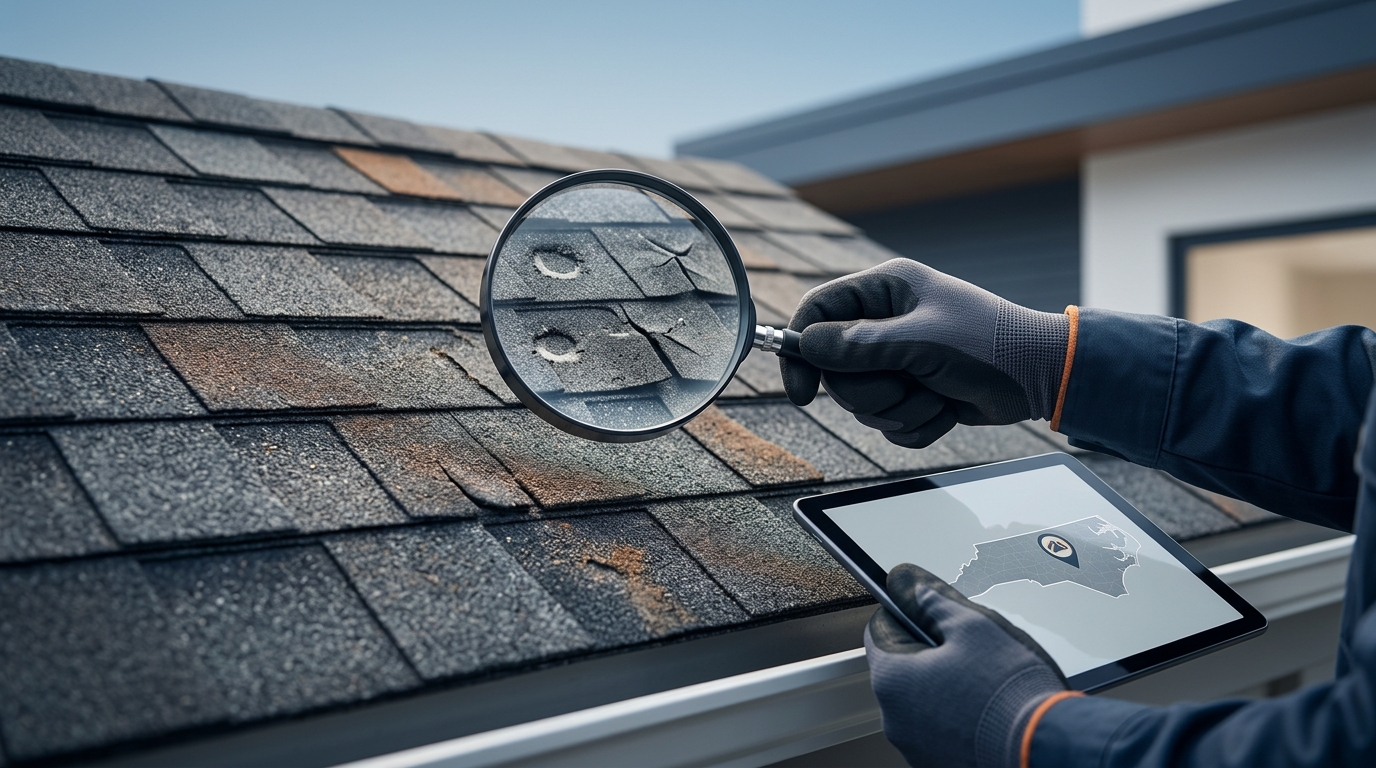
Hail is perhaps the most deceptive form of storm damage. In North Carolina, we often see 'popcorn' hail, but larger stones are not uncommon. Hail damage is often referred to as 'bruising.' Much like a bruise on an apple, the damage is beneath the surface. Impact from hail knocks the protective granules off the asphalt shingle, exposing the underlying bitumen to the sun’s harsh UV rays, which leads to rapid deterioration.
Top 10 Signs of Storm Damage on North Carolina Roofs
To help you navigate the aftermath of a storm, we have categorized the most frequent indicators of damage. If you notice any of these, it is time to schedule a professional assessment.
1. Missing, Lifted, or Creased Shingles
This is the most obvious sign. High winds can literally peel shingles back. If you see patches of your roof that look 'bald' or if you find shingles in your yard, your roof's primary defense has been breached. More subtle are 'creased' shingles—this happens when the wind lifts a shingle up and folds it back, leaving a visible horizontal line where the granules have cracked. This shingle is now structurally compromised.
2. Granule Loss and 'Bald' Spots
Check your gutters. If you see an accumulation of what looks like coarse sand or dark gravel, your shingles are shedding their protective layer. While some granule loss is normal over the life of a roof, a sudden influx after a storm indicates that hail or high-velocity rain has stripped the shingles. Without these granules, your roof will bake in the North Carolina sun and fail prematurely.
3. Dented or Damaged Metal Flashing
Your roof's flashing—the metal pieces around chimneys, vents, and valleys—is often the first place to show signs of hail. Since metal is more 'pliable' than asphalt, it will hold the indentation of a hailstone. If the metal vents on your roof are dented, it is a statistical certainty that your shingles have also suffered impact damage.
4. Water Stains on Ceilings or Walls
Damage doesn't always stay on the outside. If you notice yellow, brown, or gray rings on your ceiling after a heavy rain, you have an active leak. Because of the way water travels along rafters, the leak in your roof may not be directly above the stain on your ceiling. This requires a professional storm damage inspection to trace the source.
5. Damaged Gutter Systems
Your gutters are an extension of your roof. High winds can pull gutters away from the fascia board, while hail can leave significant dents in the troughs. If your gutters are sagging or overflowing, water can back up under the roof's edge, causing rot. We often recommend a full gutter inspection and guard installation to ensure water is properly diverted away from the foundation.
6. Bruising and Circular Cracks
Hail hits often leave a circular 'spiderweb' crack or a dark, soft spot on the shingle. These are easiest to see when the roof is slightly damp. These bruises mean the fiberglass mat inside the shingle has been fractured, allowing water to seep through over time.
7. Loose or Damaged Siding
Storm damage is rarely isolated to the roof. If wind or hail has been strong enough to damage your shingles, it has likely impacted your home's exterior walls. We frequently see cracked, dented, or missing siding after major North Carolina storms. If you see this, it’s a sign the entire building envelope needs to be checked. You can learn more about our siding services here.
8. Debris and Tree Limb Impact
Even if a tree limb didn't crash through your roof, smaller branches 'scouring' across the surface during a windstorm can scrape away granules and puncture shingles. Any heavy debris found on the roof should be treated as a potential site for hidden damage.
9. Shingle Granules in Gutter Downspouts
While we mentioned granules in the gutters, check the exit point of your downspouts. If you see piles of granules on the ground after a storm, your roof has experienced significant 'scouring,' which drastically reduces its lifespan.
10. Interior Light in the Attic
This is a DIY-friendly check. Go into your attic during the day and turn off the lights. If you can see pinpricks of daylight coming through the roof boards (outside of intentional vents), you have a hole that will allow water and pests into your home.
The MJ’s 5-Point Storm Damage Inspection Framework
At Mj's Roofing and remodeling, we don't just 'glance' at a roof. We follow a rigorous methodology to ensure no damage is missed. Here is the process we recommend for every North Carolina homeowner:
Phase 1: Ground-Level Perimeter Check
Walk around your home and look for pieces of shingles, metal, or siding on the ground. Check your fence and mailbox for hail dents, as these are great indicators of the storm's intensity.
Phase 2: Gutter and Downspout Evaluation
Examine the gutters for 'shingle silt' and dents. Ensure the downspouts are still firmly attached to the house.
Phase 3: Roof Surface Analysis
This should be done by a professional for safety. We look for 'thermal shock' cracks, wind lift, and hail bruising. We also check the 'valleys'—the areas where two roof slopes meet—as these are high-flow water areas.
Phase 4: Flashing and Penetration Inspection
We inspect the boots around PVC pipes, the flashing around chimneys, and the integrity of the ridge vents. These are the most common failure points after a storm.
Phase 5: Attic and Structural Assessment
We check the underside of the roof deck for moisture, mold, or 'decking bounce' which indicates the wood has been weakened by water absorption.
Comparison: Wind Damage vs. Hail Damage
Understanding the difference between these two helps in documenting the damage for insurance purposes.
| Feature | Wind Damage | Hail Damage |
|---|---|---|
| Visual Clue | Missing shingles, horizontal creases, flapping material. | Circular dents, dark 'bruises', missing granules in spots. |
| Primary Risk | Immediate exposure of the underlayment and decking. | Long-term UV degradation and slow-seeping leaks. |
| Detection Difficulty | Moderate to High (lifting isn't always visible). | High (often requires 'feeling' the shingle). |
| Impact on Lifespan | Immediate failure if shingles are gone. | Reduces roof life by 20-50%. |
Why Professional Inspection Matters
In North Carolina, insurance companies have specific windows for filing storm damage claims. Many homeowners wait until they see a leak to call a contractor, but by then, the 'date of loss' may have passed, and the claim could be denied. Furthermore, walking on a roof—especially one that may have structural damage or loose granules—is extremely dangerous. At Mj's Roofing and remodeling, we provide the expert documentation you need to ensure your home is restored to its pre-storm condition.
We serve a wide range of communities, providing expert roofing services across North Carolina, including Apex, Cary, Durham, and beyond. Our 30+ years of experience means we know exactly how to spot the signs that adjusters might miss.
Storm Damage FAQ
How long do I have to file a claim for storm damage in North Carolina?
While it varies by policy, most North Carolina insurance companies require you to file a claim within 12 to 24 months of the storm event. However, it is always best to file as soon as damage is discovered to prevent secondary issues like mold, which may not be covered.
Can I just repair the damaged shingles instead of replacing the whole roof?
It depends on the extent of the damage. If the storm was localized and only a few shingles were affected, a repair may suffice. However, if the wind has broken the sealant bond across large sections of the roof, or if hail has compromised the entire surface, a full replacement is usually the only way to guarantee your home's safety.
What if my roof doesn't look damaged from the ground?
Many signs of storm damage on North Carolina roofs are invisible from the ground. Hail bruises are often less than an inch in diameter, and 'lifted' shingles often settle back down after the wind dies down, though their seal is broken. A professional roof-level inspection is the only way to be sure.
Will my insurance premiums go up if I file a storm damage claim?
In most cases, insurance companies cannot raise your individual rates for a 'Catastrophic' event (like a major storm or hurricane) because these are considered 'Acts of God' rather than negligence. Rates are typically adjusted based on the region's overall risk.
Protect Your North Carolina Home Today
Your roof is the first line of defense for your family and your biggest investment. Don't leave its integrity to chance. If you suspect your home has been hit by a recent storm, or if you simply haven't had an inspection in the last few years, Mj's Roofing and remodeling is here to help. With over three decades of local expertise, we provide the honest assessments and quality craftsmanship North Carolinians have trusted since the 1990s.
Ready to secure your home? Book your professional inspection now or contact us today to learn more about our comprehensive roofing and remodeling services. We are proud to be your local partner in keeping North Carolina homes safe, dry, and beautiful.