
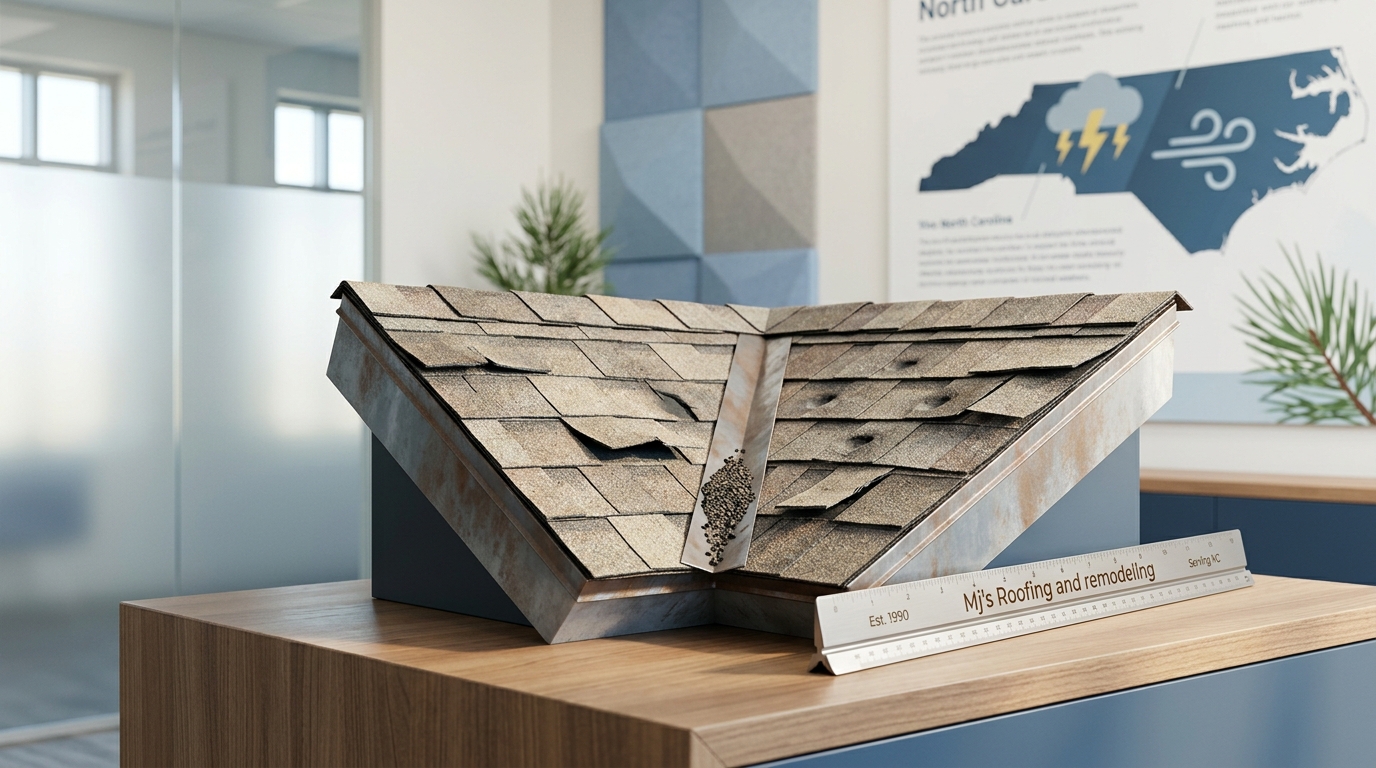
7 Key Signs of Storm Damage on North Carolina Roofs
The Critical Importance of Identifying Storm Damage in North Carolina
North Carolina homeowners are no strangers to the volatile elements. From the hurricane-force winds that batter the coast to the severe hailstorms common in the Piedmont and the heavy snow loads in the west, our roofs endure a unique set of challenges. At Mj's Roofing and remodeling, we have spent over 30 years protecting homes across the state, and we’ve seen firsthand how seemingly minor weather events can lead to catastrophic structural failure if left unaddressed.
Identifying the signs of storm damage on North Carolina roofs is not always as simple as spotting a fallen tree or a gaping hole. Damage is often subtle, hiding beneath the surface of shingles or within the intricate components of your roofing system. Failing to detect these issues early can lead to mold growth, compromised insulation, and expensive interior repairs. This comprehensive guide leverages our three decades of expertise to help you identify the red flags and take proactive steps to secure your most valuable investment.
1. Hail Damage: The Subtle Destroyer
Hail is one of the leading causes of roof degradation in North Carolina. While large hailstones (1 inch or larger) cause obvious dents, even small hail can strip away the protective layer of your roofing material. When these impacts occur, they create 'bruises' that are soft to the touch, much like the bruise on an apple.
Identifying Shingle Bruising and Granule Loss
Asphalt shingles are coated with ceramic granules that protect the underlying bitumen from UV radiation. When hail hits, these granules are knocked loose and washed into the gutters. If you notice a high concentration of 'sand' or granules in your downspouts after a storm, it is one of the primary signs of storm damage on North Carolina roofs. Without this protective layer, the sun will quickly bake the shingle, making it brittle and prone to cracking.
Impact Marks on Metal and Flashing
For those with metal components or specialty residential roofing systems, hail will leave distinct, round indentations. Check your roof vents, flashing, and valley tins. If these soft metal components show dings, it is a mathematical certainty that your shingles have also sustained damage, even if it isn't visible from the ground.
2. Wind Damage: Uplift and Creasing
North Carolina’s proximity to the Atlantic makes wind a constant threat. High-velocity winds create a vacuum effect known as 'uplift.' This can pull shingles upward, breaking the thermal seal that holds them in place. Once that seal is broken, the roof is vulnerable to 'wind-driven rain'—water that is forced upward under the shingles.
Missing or Lifted Shingles
The most obvious sign of wind damage is missing shingles. However, keep an eye out for shingles that appear to be 'lifting' or tabs that don't lay flat. Even if the shingle didn't blow off, the structural integrity of the fastener may be compromised. We often see 'creased' shingles after hurricanes; this occurs when the wind folds the shingle back, creating a permanent line across the top where the asphalt has cracked.
3. Collateral Damage: Gutters and Exterior Remodeling
Sometimes the best way to find damage on the roof is to look just below it. Your gutter system acts as a catchment for evidence. Dented gutters, detached downspouts, or gutters pulled away from the fascia board are clear indicators that the storm was severe enough to warrant a professional roof inspection. In many cases, a storm that damages your roof will also impact your siding or exterior trim.
The Role of Gutter Integrity
If your gutters are clogged or sagging due to storm debris, water will back up under the eave of your roof. This leads to fascia rot and can even damage the roof deck. Proper gutter installation is your first line of defense against the heavy rainfall associated with North Carolina thunderstorms. If you see your gutters overflowing during a storm, it’s a sign that your roofing system is being overwhelmed.
4. Moisture Infiltration: The Indoor Signs
Not all signs of storm damage are found outside. In fact, by the time you see signs inside, the damage is often advanced. After a major weather event, grab a flashlight and head to the attic. Look for the following:
- Water Stains: Check the rafters and the underside of the roof decking for dark spots or dampness.
- Light Leaks: If you can see daylight peeking through the roof boards, water can certainly get in.
- Musty Odors: This indicates trapped moisture and potential mold growth, often caused by a storm-related breach in the vapor barrier.
Comparison Table: Wind vs. Hail Damage
| Feature | Hail Damage Indicators | Wind Damage Indicators |
|---|---|---|
| Visual Pattern | Random, circular impact marks/bruises. | Linear creases or missing sections. |
| Primary Material Loss | Heavy granule loss in gutters. | Entire shingle tabs or sections. |
| Collateral Damage | Dented vents, siding, and mailboxes. | Downed limbs, damaged fascia, and fences. |
| Risk Level | Long-term leaks and UV degradation. | Immediate exposure to rain and debris. |
5. Flashings and Penetrations
The areas where your roof meets a vertical surface—like a chimney, dormer, or vent pipe—are the most vulnerable points of any structure. Storms often cause the sealant around these 'penetrations' to crack or pull away. If you notice flashing that is warped, rusted, or missing, the underlying wood is likely soaking up water every time it rains. North Carolina’s high humidity levels mean that once wood gets wet, it rarely dries out on its own, leading to rapid rot.
6. Granule Accumulation in Downspouts
As mentioned, granules are the lifeblood of asphalt shingle longevity. While some granule loss is normal for a brand-new roof, an established roof should not be 'shedding' significantly. After a storm, if you find piles of granules at the exit point of your downspouts, your roof has likely sustained 'impact scour.' This significantly shortens the lifespan of the roof and is often a valid reason for an insurance claim.
7. Tree Limb Overhangs and Scratches
In North Carolina, our beautiful oak and pine trees can become liabilities during a storm. Even if a large branch doesn't fall, high winds can cause smaller limbs to scrape across the roof surface repeatedly. This 'scrubbing' action removes granules and can even puncture the shingle matting. If you see branches resting on your roof after a storm, there is a high probability of surface-level damage that needs to be assessed.
Actionable Storm Damage Methodology: The 3-Step Process
At Mj's Roofing and remodeling, we recommend a disciplined approach to post-storm assessment to ensure nothing is missed.
Step 1: Ground-Level Survey
Walk the perimeter of your home. Use binoculars to look for missing shingles or bent flashing. Look for 'splatter marks' on your driveway or deck; if the storm was strong enough to clean the oxidation off your fence or deck, it was strong enough to damage your roof.
Step 2: Document Everything
Before you move any debris or start repairs, take high-resolution photos. Insurance companies require proof of the 'date of loss' and the extent of the damage. Accurate documentation is the difference between a fully covered replacement and a denied claim.
Step 3: Professional Inspection
Never climb onto a storm-damaged roof yourself. Damaged shingles are slippery, and the structural integrity of the deck may be compromised. A professional contractor from Mj's Roofing and remodeling has the safety equipment and the trained eye to spot issues that a homeowner might miss. We provide detailed reports that can be used to facilitate your insurance process.
Frequently Asked Questions About Storm Damage
Can I wait to repair storm damage?
We strongly advise against waiting. In North Carolina, a small leak during a summer thunderstorm can lead to significant mold growth within 24 to 48 hours due to our heat and humidity. Furthermore, most insurance policies have a 'statute of limitations'—usually one year—to file a claim after the date of loss.
Does my insurance cover all types of storm damage?
Most standard homeowners' insurance policies cover wind and hail damage. However, 'flood damage' (water rising from the ground) usually requires a separate policy. It is important to review your policy details or consult with a professional who understands the local insurance landscape.
What if I only see damage on one side of the roof?
Storms are directional. It is very common for the windward side of a home to sustain heavy damage while the leeward side remains intact. However, even if only one slope is damaged, the entire system should be inspected to ensure the ridges and valleys—where the slopes meet—are still watertight.
Partner with North Carolina’s Trusted Roofing Experts
For over 30 years, Mj's Roofing and remodeling has been the cornerstone of home protection in North Carolina. We don't just fix roofs; we provide peace of mind. Our team understands the specific local building codes and the unique environmental stressors that our climate imposes on residential and commercial structures.
If you suspect your home has been affected by recent weather, don't leave it to chance. The signs of storm damage on North Carolina roofs are an invitation to prevent further loss. From our comprehensive FAQ section to our dedicated service teams, we are here to guide you through every step of the recovery process. Protect your home today by scheduling a professional assessment with the experts who know North Carolina weather best.
Ready to ensure your roof is storm-ready? Contact Mj's Roofing and remodeling today for a professional inspection and expert advice you can trust.