
Signs Your Roof Needs Repair After a Storm: Expert Guide
How to Identify Damage: Critical Signs Your Roof Needs Repair After a Storm
North Carolina is no stranger to volatile weather. From the humid subtropical storms that roll through the Piedmont to the high-velocity winds of a coastal hurricane, our homes are constantly on the front lines of nature's elements. After 30 years of protecting North Carolina families, the team at MJ's Roofing and remodeling has seen firsthand how a single afternoon storm can compromise the structural integrity of a home. The challenge for many homeowners is that roof damage isn't always obvious from the driveway. Recognizing the specific signs your roof needs repair after a storm is not just about home maintenance—it is about preventing a minor leak from becoming a catastrophic structural failure.
In this comprehensive guide, we will draw upon decades of local expertise to outline the subtle and overt indicators of storm damage. Whether you are dealing with the aftermath of a hailstorm or high-velocity winds, knowing what to look for can save you thousands in secondary repairs. If you suspect damage, it is vital to consult with a professional residential roofing expert who understands the nuances of various roofing materials and North Carolina building codes.
The MJ’s 5-Point Post-Storm Inspection Framework
At MJ's Roofing and remodeling, we utilize a systematic approach to damage assessment. Homeowners can follow this same methodology to determine if professional intervention is required. We recommend performing this check as soon as it is safe to go outside after a significant weather event.
1. The Ground-Level Perimeter Search
Before ever climbing a ladder, start on the ground. Walk the entire perimeter of your home. You are looking for more than just the roof itself; you are looking for evidence of what happened on the roof. Look for pieces of shingles, bits of metal flashing, or excessive amounts of asphalt granules near downspouts. If you see "bald spots" on shingles from the ground, that is a primary indicator that the protective UV layer has been stripped away.
2. Gutter and Downspout Analysis
Your gutters act as a collection basin for roof debris. High-impact hail or heavy rain will wash away the granules that protect asphalt shingles from the sun. If your gutters are filled with sediment that looks like coarse sand, your shingles have lost their primary line of defense. Additionally, check for dents on the gutters themselves; if the metal of the gutter is dented, it is almost certain the roof took a similar or greater impact.
3. Soft Metal and Component Inspection
Roofing systems are more than just shingles. They include vents, flashing, and chimney caps. These "soft metals" often show signs of damage long before the shingles do. Look for small dings or "bruises" in the metal attic vents. Because these components are thinner than the structural roof deck, they serve as the "canary in the coal mine" for hail damage.
4. Shingle Integrity: Wind vs. Hail
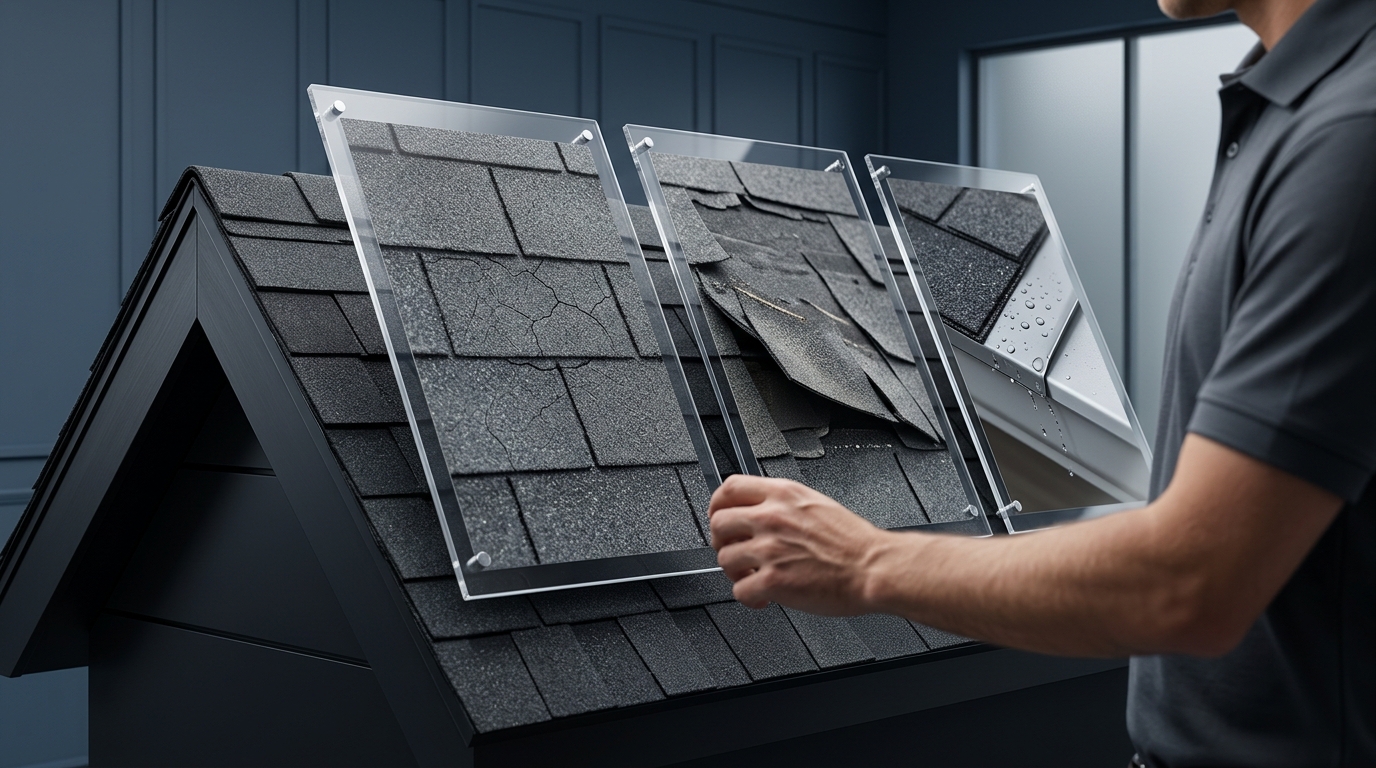
It is important to distinguish between wind damage and hail damage, as they require different repair strategies. Wind tends to lift or crease shingles, while hail causes impact fractures.
5. Interior Attic Assessment
The most dangerous signs your roof needs repair after a storm are often found inside. Go into your attic with a high-powered flashlight. Look for moisture on the rafters, damp insulation, or light shining through the roof deck. Even if you don’t see a drip in your living room, moisture in the attic is a sign that the waterproof barrier has been breached.
Comparing Wind Damage vs. Hail Damage
| Feature | Wind Damage Signs | Hail Damage Signs |
|---|---|---|
| Visual Cue | Missing, lifted, or creased shingles. | Circular pits, "bruising," or granule loss. |
| Location | Often found at the edges or ridges of the roof. | Random patterns across the entire roof slope. |
| Immediate Risk | Exposure of the underlayment to direct rain. | Weakening of the shingle's structural core. |
| Secondary Signs | Detached flashing or damaged soffits. | Dented gutters, siding, or HVAC units. |
The Silent Killer: Asphalt Granule Loss
One of the most overlooked signs your roof needs repair after a storm is the loss of granules. Shingles are coated with these small ceramic-coated stones to provide two functions: fire resistance and UV protection. When a heavy storm—particularly one with hail—strikes, these granules are knocked loose. While the roof may look "okay" from a distance, the absence of granules means the underlying asphalt is now exposed to the sun. Within months, the sun's UV rays will bake the asphalt, causing it to crack and curl, leading to leaks during the next rainfall. This is why immediate inspection by a Clayton roofing contractor or a local expert in your specific area is essential.
Why Prompt Action Matters: The Statistics of Delay
Industry data suggests that homeowners who wait more than 6 months to address storm damage end up paying 35-50% more in repair costs. This is due to secondary damage including:
- Mold and Mildew Growth: In the humid North Carolina climate, mold can begin to grow within 24-48 hours of water intrusion.
- Structural Rot: Water that sits on wooden rafters or the roof deck will eventually cause rot, requiring much more expensive structural repairs than a simple shingle replacement.
- Increased Energy Bills: Wet insulation loses its R-value, meaning your HVAC system has to work harder to maintain temperatures.
- Insurance Deadlines: Many insurance policies have a statute of limitations (often 1 year) for filing a storm damage claim.
What to Do If You See Signs of Damage
If you have identified any of the signs your roof needs repair after a storm, your next steps are critical.
- Document Everything: Take photos from the ground and keep a record of the date and time of the storm.
- Temporary Mitigation: If you have an active leak, place buckets and move valuables. Do not attempt to climb onto a wet, damaged roof yourself.
- Call a Licensed Professional: Reach out to a contractor with deep roots in the community. At MJ's Roofing and remodeling, we’ve spent three decades building a reputation for honesty. We will provide a transparent assessment of whether you need a minor repair or a full replacement.
Frequently Asked Questions About Storm Damage
Can I just replace the missing shingles myself?
While it may seem simple, replacing a few shingles often masks deeper issues like damaged underlayment or compromised flashing. Furthermore, DIY repairs can sometimes void your manufacturer's warranty. It is always best to have a professional inspection first.
How long do I have to file an insurance claim for roof damage?
This varies by policy, but most North Carolina homeowners insurance policies require you to file within 12 months of the storm event. Waiting too long can result in a denied claim, even if the damage is significant.
Does a dented gutter always mean my roof is damaged?
Not always, but it is a very strong indicator. Hail large enough to dent metal gutters is typically large enough to fracture the matting of an asphalt shingle. It should always trigger a professional inspection.
Will my insurance premiums go up if I file a claim?
In many states, including North Carolina, insurance companies are often prohibited from raising your individual rates based on a "catastrophe claim" (like a major storm). However, overall rates in an area can change based on regional weather patterns.
Conclusion: Protect Your Investment
Your roof is the most important component of your home's envelope. Understanding the signs your roof needs repair after a storm is the first step in responsible homeownership. From the subtle loss of granules to the obvious sight of a missing shingle, every sign is a signal that your home is vulnerable. With over 30 years of experience serving our local community, MJ's Roofing and remodeling is here to provide the quality craftsmanship and exceptional service you deserve.
Don't wait for a leak to tell you there's a problem. If a storm has recently passed through your neighborhood, contact MJ's Roofing and remodeling today for a professional inspection and peace of mind. We are your trusted local roofing experts, dedicated to protecting North Carolina homes one roof at a time.